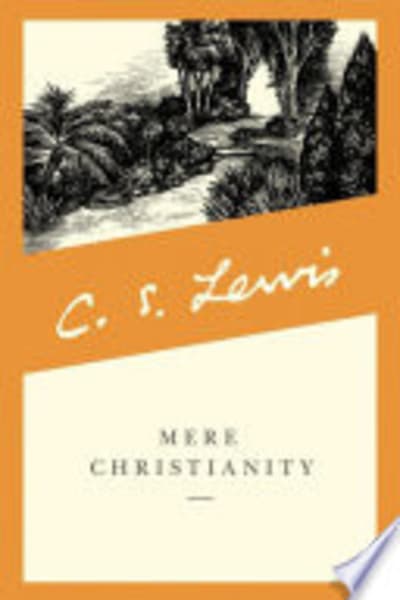
Mere Christianity — Book Summary & Review
by C.S. Lewis
Last updated:
Mere Christianity Summary
In Mere Christianity, Lewis introduces the 'Law of Human Nature' as the starting point for his argument, suggesting that all humans inherently know right from wrong. The book is structured around three main sections originally broadcasted as radio talks, which were later published as separate works: The Case for Christianity, Christian Behaviour, and Beyond Personality. In the section 'Christian Behaviour', Lewis explores the practical implications of Christian ethics, discussing virtues such as forgiveness and charity in straightforward terms. While Lewis's arguments are compelling and his writing is accessible, the book does not aim to provide a comprehensive theological treatise or delve into deep doctrinal discussions, which might frustrate readers seeking exhaustive theological analysis. Lewis's focus is on presenting the core tenets of Christianity in a way that transcends denominational boundaries, making it approachable for both believers and skeptics alike. However, his arguments may feel simplistic to those well-versed in theological debates, as they are primarily aimed at a general audience seeking a foundational understanding of Christian beliefs.
Key Takeaways from Mere Christianity
-
1
Law of Human Nature: Lewis argues that humans have an inherent sense of right and wrong, suggesting a moral lawgiver.
-
2
Moral Law: Explains the concept of an objective standard of morality, which Lewis argues points to the existence of God.
-
3
Cardinal Virtues: Discusses four key virtues—prudence, justice, temperance, and fortitude—as essential for Christian living.
-
4
Christian Behaviour: Explores practical ethics, emphasizing forgiveness and charity as central to living a Christian life.
-
5
Trilemma Argument: Lewis's famous argument that Jesus must be either Lord, liar, or lunatic, challenging readers to consider their beliefs.
Who Should Read This
If you find yourself questioning the fundamental beliefs of Christianity or seeking a foundational understanding of its core principles, this book is for you. Someone who appreciates a clear, conversational exploration of faith without deep theological jargon will find value here.
Who Shouldn't Read This
If you're looking for an in-depth theological analysis or a detailed exploration of Christian doctrine, this book will disappoint. Lewis's approach is more introductory and broad, which may not satisfy readers seeking advanced discussions.
Editor's Verdict
The best aspect of Mere Christianity is its accessible presentation of complex ideas, notably in the 'Trilemma Argument'. It lacks depth for readers seeking advanced theological exploration. This book is perfect for someone at the beginning of their spiritual journey or those re-evaluating their Christian beliefs in a straightforward manner.
Ready to read Mere Christianity?
Get your copy on Amazon today.
Mere Christianity — Frequently Asked Questions
About C.S. Lewis
C.S. Lewis (1898–1963) was a British writer and scholar, renowned for his works on Christian apologetics and literature. Educated at Oxford University, he later became a Fellow and Tutor in English Literature at Magdalen College. His expertise in theology and philosophy, combined with his personal conversion to Christianity, underpins his credibility in writing "Mere Christianity." Lewis is also celebrated for "The Chronicles of Narnia" series and "The Screwtape Letters," which further showcase his literary prowess and theological insights.