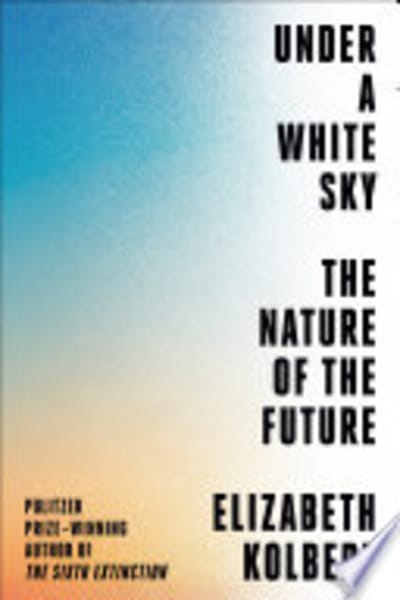
Under a White Sky — Book Summary & Review
Last updated:
Under a White Sky Summary
Kolbert's 'Under a White Sky' opens with a dive into the heart of the Mojave Desert, where biologists are desperately trying to save the Devil's Hole pupfish from extinction. This sets the stage for a series of compelling vignettes where Kolbert, with her sharp journalistic lens, explores humanity's attempts to fix the very problems it has created. The book is structured around these stories, including chapters like 'The Engineer's Dilemma,' which examines carbon capture projects in Iceland. Kolbert's narrative is a sobering exploration of how technological interventions are both necessary and fraught with unforeseen consequences. However, readers looking for in-depth scientific explanations or technical data may find the book lacking, as it leans more towards storytelling and less towards scientific deep dives.
Key Takeaways from Under a White Sky
-
1
The Devil's Hole Pupfish: Highlights the extreme efforts to save a fish on the brink of extinction in a tiny desert pool.
-
2
Geoengineering Projects: Explores radical ideas like shooting tiny diamonds into the stratosphere to combat climate change.
-
3
Super Coral Experiment: Australian scientists are working to breed corals that can survive rising ocean temperatures.
-
4
Carbon Capture in Iceland: Engineers are turning carbon emissions into stone, a promising yet complex solution to excess CO2.
-
5
Ten-Thousand-Year Exercise: Kolbert argues that human civilization's history is a continuous attempt to defy natural limits.
Who Should Read This
Someone who feels overwhelmed by the state of the environment and wants a grounded, narrative-driven exploration of potential solutions. If you're intrigued by real-world stories of scientific innovation and human resilience, this book will resonate with you.
Who Shouldn't Read This
If you expect a deep scientific analysis with extensive data and technical jargon, this book might disappoint. Readers seeking a step-by-step guide to environmental activism or policy-making will not find it here.
Editor's Verdict
The book excels in weaving together narrative-driven stories like the Devil's Hole pupfish saga to illustrate the complexity of ecological challenges. However, it doesn't offer a detailed scientific breakdown or technical solutions. This is a must-read for anyone at a crossroads, contemplating the paradox of human progress and environmental impact.
Ready to read Under a White Sky?
Get your copy on Amazon today.
Under a White Sky — Frequently Asked Questions
About Elizabeth Kolbert
Elizabeth Kolbert is an American journalist and author known for her work on environmental issues. She has been a staff writer for The New Yorker since 1999. Kolbert gained prominence with her book "Field Notes from a Catastrophe" and won a Pulitzer Prize for "The Sixth Extinction." Her credibility stems from her extensive research and reporting on climate change and environmental science. "Under a White Sky" explores human intervention in nature to address ecological crises.