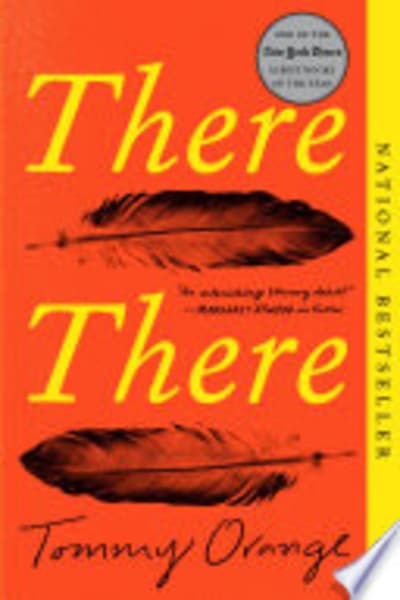
There There — Book Summary & Review
by Tommy Orange
Last updated:
There There Summary
The structure of There There is built around shifting viewpoints before and during the Big Oakland Powwow, and Tommy Orange keeps tightening the braid until the whole crowd feels like one organism with too many separate wounds. Orange opens with Jacquie Red Feather arriving newly sober, then pivots through Dene Oxedrene’s grief, Edwin Frank’s search for his father, Bobby Big Medicine’s drum work, Opal Viola Victoria Bear Shield watching over Orvil Red Feather, and Tony Loneman arriving with intentions that turn the story ugly fast. A key section—centered on the Grand Entry and the way people interpret “modern” Indigeneity while performing it—makes the powwow feel both communal and precarious, as if joy is always negotiating with history. One of Orange’s most effective moves is the way he uses the characters’ ordinary tasks (getting ready, traveling, fixing a costume, scrolling YouTube for dance steps) as pressure points for larger forces: dislocation, addiction, family silence, and the constant demand to be “real” in someone else’s terms.
The limitation is that Orange doesn’t offer the comfort of a clean moral map; the book keeps its focus on intersectional chaos and consequences, so if you want a soothing arc or a tidy explanation for why violence happens, you’ll feel denied. Still, the final convergence—when the story’s timelines and bodies collide—lands because Orange has already seeded how each character’s private story is connected to the same public space and the same old American appetite for erasure.
I finished There There feeling like Orange wrote a novel that refuses to separate “present” from “past,” and that refusal is the point: Tommy Orange makes you watch how identity performs under stress, and how quickly stress can turn a performance into catastrophe.
Enjoyed this one? Read these next.
Top picks in Fiction / Literary, chosen for readers of There There.

A Gentleman in Moscow
by Amor Towles
Check price on Amazon
A Brief History of Seven Killings
by Marlon James
Check price on Amazon
The Sellout
by Paul Beatty
Check price on Amazon
Lincoln in the Bardo
by George Saunders
Check price on AmazonKey Takeaways from There There
-
1
Big Oakland Powwow framing: Orange sets one public event as the story’s pressure chamber for private grief and public identity.
-
2
Jacquie Red Feather’s sobriety arc: recovery is shown as a daily negotiation with shame, not a dramatic switch-flip moment.
-
3
Grand Entry choreography: the novel treats performance as politics, where costumes and songs carry arguments about who counts as “present.”
-
4
Orvil Red Feather’s YouTube learning: modern tools don’t dilute Indigeneity; they expose how belonging gets taught and policed.
-
5
Tony Loneman’s intentions: Orange makes violence feel prepared by systems and choices, not random shock.
Who Should Read This
Someone who’s spent years feeling like their life is “behind” or “off-script” will recognize the novel’s obsession with how people arrive at a moment already carrying consequences. If you’re tired of Native characters being flattened into symbols, you’ll likely appreciate how Orange gives each person a specific job, flaw, and private history at the powwow.
Who Shouldn't Read This
If you need a linear plot with clear cause-and-effect and emotional rescue, Orange’s multi-POV braid will frustrate you. If you’re uncomfortable with relentless tension—grief, addiction, and threats closing in—you may find the pacing too punishing for your reading mood.
Editor's Verdict
The best thing There There does is its multi-voice construction around the Big Oakland Powwow, where the Grand Entry and its surrounding preparations make identity feel both communal and dangerously fragile. The real limitation is that Orange offers no calming interpretive handrails; the book keeps violence and grief in the foreground without promising catharsis. This hits hardest for anyone who’s spent the last year scrolling past politics-as-spectacle and wondering why real communities feel so unsafe in the present, even when they’re celebrating.
Ready to read There There?
Get your copy on Amazon today.
There There — Frequently Asked Questions
About Tommy Orange
Tommy Orange is a member of the Cheyenne and Arapaho Tribes and a Native American writer. He grew up in Oakland, California, and has worked as a journalist and teacher. His reporting and research, along with his experience writing about contemporary Indigenous life, make him credible on Native identity and community. Orange is the author of There There (2018) and the short story collection Wandering Stars (2019).