The White Tiger — Book Summary & Review
Last updated:
The White Tiger Summary
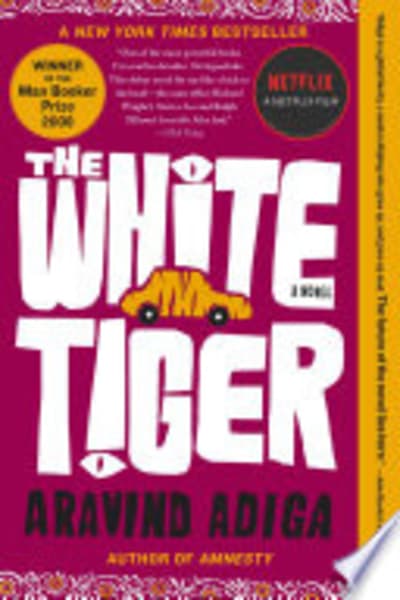
In 'The White Tiger', Adiga crafts a narrative through a series of letters from Balram Halwai to a Chinese premier, offering a raw look at India's class struggles. One standout chapter, 'The Fourth Morning', reveals Balram's transformation from a village boy to a cunning entrepreneur, showcasing his moral ambiguity and ruthless ambition. Adiga deftly uses Balram's voice to expose the stark contrasts between India's burgeoning wealth and its grinding poverty. However, the book's relentless cynicism and Balram's unsettling justification for murder might alienate readers looking for redemption or moral clarity. Adiga's sharp critique of the Indian caste system and the corrupting influence of ambition is poignant, but the book doesn't offer solutions for those seeking hopeful narratives.
Key Takeaways from The White Tiger
-
1
The Rooster Coop: Adiga uses this metaphor to describe the oppressive social structure trapping India's lower class.
-
2
The Great Indian Family: A term Balram uses to depict the societal expectations and familial obligations that restrict personal freedom.
-
3
The Darkness vs. The Light: Adiga contrasts rural poverty ('The Darkness') with urban prosperity ('The Light') in a stark dichotomy.
-
4
The White Tiger: Balram's nickname symbolizes his uniqueness and cunning in breaking free from societal chains.
-
5
The Chandelier: Represents Balram's aspiration and the hollow success achieved through morally dubious means.
Who Should Read This
If you're grappling with the moral complexities of ambition and success in a rapidly changing society, this book will resonate. Someone who wants a no-holds-barred look into the socio-economic divides of modern India will find this narrative gripping.
Who Shouldn't Read This
If you're looking for a story that offers redemption or clear moral lessons, this book will leave you wanting. The dark, cynical tone and lack of hopeful resolutions may frustrate readers seeking uplifting tales.
Editor's Verdict
Adiga's portrayal of the 'Rooster Coop' metaphor is a powerful critique of societal constraints. However, the narrative's relentless cynicism and lack of moral clarity can be off-putting. This book hits hardest if you're questioning the cost of ambition in an ethically complex world.
Ready to read The White Tiger?
Get your copy on Amazon today.
The White Tiger — Frequently Asked Questions
About Aravind Adiga
Aravind Adiga, born on October 23, 1974, in Chennai, India, is an acclaimed author and journalist. He studied English literature at Columbia University and the University of Oxford. Adiga's debut novel, "The White Tiger," won the 2008 Man Booker Prize, providing a critical exploration of India's class struggles and economic disparities. His journalistic background and Indian heritage lend credibility to his insights. Other notable works include "Between the Assassinations" and "Last Man in Tower."