The White Knight: Tirant Lo Blanc — Book Summary & Review
Last updated:
Public domain via Project Gutenberg — free and legal.
The White Knight: Tirant Lo Blanc Summary
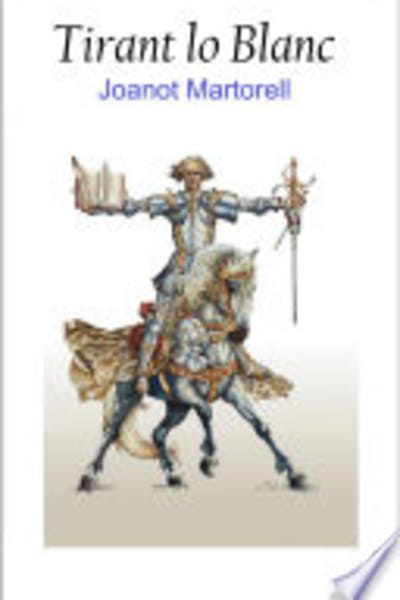
In Tirant lo Blanc, Martorell and de Galba hinge the whole book on a chivalric code that keeps sounding noble while the plot quietly shows how power, vanity, and desire rewrite it in real time. The novel is structured like a long sequence of court episodes and campaigns, and it keeps returning to the same tension: Tirant’s competence makes him look like the perfect knight, but his motives and the people around him keep exposing the code’s blind spots. You see it early in the way Tirant’s “extraordinary skill and virtue” are treated as political tools, not pure moral virtues, and later when romance expectations collide with the mechanics of siege warfare and negotiation. Martorell is especially sharp when he lets love function as both strategy and vulnerability: courtly language becomes a currency, and loyalty is tested by who benefits from the story being told about you.
A concrete example that sticks is the book’s sustained attention to courtly performance—how characters stage themselves as righteous while maneuvering for advantage. Another is the recurring contrast between battlefield logistics (mud, timing, command decisions) and the speeches that pretend heroism is mostly about honor. Martorell’s critique isn’t a single lecture; it’s the steady accumulation of scenes where the “idealized hero” keeps losing the argument to human weakness. Even when Tirant wins, the text refuses to let victory settle the moral question.
Honest limitation: this is not a streamlined romance. If you want a tight, modern emotional arc or a consistent focus on one love plot, the political sprawl and episodic military sections will frustrate you, and the archaic language can make the realism feel workmanlike rather than lyrical.
Key Takeaways from The White Knight: Tirant Lo Blanc
-
1
Tirant’s chivalric code: The book treats it like a public script characters exploit, not a private moral compass.
-
2
Courtly love as politics: Romance scenes operate like negotiations, with status and leverage shaping every “tender” moment.
-
3
Battle realism: Campaign material emphasizes logistics and decision-making, undercutting knightly heroics as pure honor.
-
4
Martorell’s irony: Triumph keeps arriving with a moral aftertaste, because motives and consequences never fully align.
-
5
Episodic structure: The alternating court and war segments create critique through accumulation, not one tidy argument.
Who Should Read This
Someone who keeps getting annoyed by medieval “noble hero” fantasies and wants realism threaded through romance and war. If you’re wrestling with how ambition disguises itself as virtue at work or in family politics, this will feel uncomfortably familiar.
Who Shouldn't Read This
Someone who needs a fast-moving plot with modern pacing will likely feel dragged by the court-and-campaign sprawl. If you want the book to deliver one clean love story, Martorell’s wider political focus will frustrate you.
Editor's Verdict
The single best thing Martorell does is use Tirant’s competence to expose the gap between chivalric ideals and how people actually wield power, especially through the courtly-love-as-leverage scenes. The real limitation is that the episodic structure keeps switching gears between court performance and military logistics, so emotional momentum can stall. This hits hardest for anyone reading before a big career pivot, when you’re trying to decide whether your “honor” is real principle or just a persuasive narrative.
Ready to read The White Knight: Tirant Lo Blanc?
Get your copy on Amazon today.
The White Knight: Tirant Lo Blanc — Frequently Asked Questions
About Joanot Martorell
Joanot Martorell (c. 1413–1465) was a Valencian nobleman and writer from the Crown of Aragon. He is best known as the author of Tirant lo Blanc (The White Knight), a major 15th-century chivalric romance set largely in the Eastern Mediterranean. Martorell was credible on military and courtly matters because he served in campaigns and lived within the political-military culture he depicts. Other works include Curial e Güelfa and several surviving letters and documents.