The Story of a Pioneer — Book Summary & Review
Last updated:
Public domain via Project Gutenberg — free and legal.
The Story of a Pioneer Summary
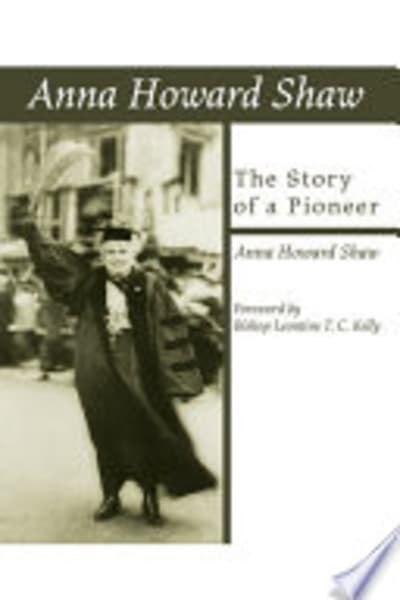
Anna Howard Shaw’s autobiography is built around her shift from frontier subsistence work to public leadership, and the book keeps returning to that contrast: what a woman does to survive versus what she can do to organize. Early on, Shaw frames education and ministry as a practical ladder, not a romantic calling—she describes the grind of schooling, then the training at Boston Theological School (1876–1878), and how those steps collide with church politics when ordination is blocked. One of the most revealing through-lines is how Shaw treats “respectability” as something you can’t wait for: when the New England Conference of the Methodist Episcopal Church refuses her ordination, she doesn’t retreat; she pursues ordination through the Methodist Protestant Church in Tarrytown. That insistence on process becomes sharper as she moves from pastoral duties to suffrage work, especially after she resigns her parishes in 1885 to lecture for the Massachusetts Woman Suffrage Association.
Shaw’s presidency years (vice-president from 1892 to 1904, president from 1905 to 1915) are where the narrative gains its political muscle. She writes with the credibility of someone who has traveled constantly, and the book’s frontier passages—northern Michigan farm life and her father’s absences—aren’t decorative background; they explain why her reform work is so grounded in labor, logistics, and stamina. Shaw also threads in movement history and personal relationships: Susan B. Anthony’s encouragement, Francis Willard’s invitation to lead the WCTU’s Franchise Department (1888–1892), and anecdotes about figures like Julia Ward Howe and John Greenleaf Whittier. A limitation: the book is strongest as lived testimony and organizational memoir, not as a systematic argument for women’s rights—if you want theory, policy details, or a tight rhetorical blueprint, Shaw’s account will feel episodic and sometimes more interested in people than in ideas.
Key Takeaways from The Story of a Pioneer
-
1
Ordination blocked: Shaw shows how institutional gatekeeping forces strategy changes, pushing her from one denomination to another.
-
2
Albion College grind: Her schooling is portrayed as daily labor, not inspiration, and it shapes her later public discipline.
-
3
Franchise Department leadership: Shaw treats temperance and suffrage as linked organizing work through a specific WCTU role.
-
4
National American Woman Suffrage Association presidency: Her leadership is built on travel logistics and relentless speaking circuits.
-
5
Frontier subsistence labor: Northern Michigan farm life functions as an explanation for her political stamina and priorities.
Who Should Read This
If you’re wrestling with whether activism is supposed to be “earned” through credentials, Shaw’s story of blocked ordination and then rerouted authority will land hard. Someone who’s burned out on abstract reform and wants a first-person account of organizing work—travel, schedules, and institutional fights—should read Shaw.
Who Shouldn't Read This
If you’re looking for a tightly argued, modern-style political philosophy, Shaw’s autobiography won’t give you much beyond narrative and movement history. If you mainly want a polished, literary memoir voice rather than a document-like sequence of experiences, the episodic structure may frustrate you.
Editor's Verdict
The single best thing this book does is connect Shaw’s early life constraints to her later leadership mechanics, especially when ordination is blocked and she pivots into suffrage organizing. The real limitation is that Shaw rarely develops a sustained theoretical argument for women’s rights; she stays at the level of testimony and organizational recollection. This will hit hardest for anyone who’s mid-career and questioning why institutions keep saying “later,” right at the moment Shaw chooses rerouting instead of waiting.
Ready to read The Story of a Pioneer?
Get your copy on Amazon today.
The Story of a Pioneer — Frequently Asked Questions
About Anna Howard Shaw
Anna Howard Shaw (1847–1919) was a U.S. physician, minister, and leading women’s rights advocate. Born in England and raised in the United States, she trained as a medical doctor and became one of the first women to practice medicine in the U.S. She later worked as a Methodist minister and national organizer for women’s suffrage. Her credibility on pioneer life comes from her firsthand experiences as a frontier-era immigrant and reformer. Other notable works include The Story of a Pioneer (1895) and Women’s Suffrage (1915).