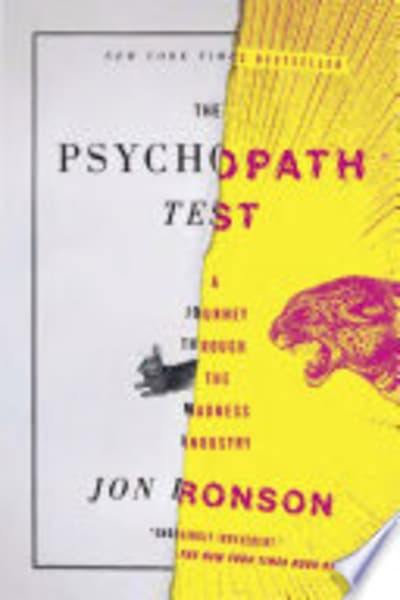
The Psychopath Test — Book Summary & Review
by Jon Ronson
Last updated:
The Psychopath Test Summary
Jon Ronson’s The Psychopath Test begins with a strange mystery: a cryptic book delivered to neurologists, a setup that signals what follows—an energetic look at psychopathy in the machinery of power. Ronson organizes the book around his meetings with a grab bag of unsettling figures, including a death-squad leader and a high-profile CEO, all filtered through the checklist devised by psychologist Bob Hare. In the chapter “Night of the Living Dead,” he heads into the unsettling atmosphere of Broadmoor Psychiatric Hospital, where he speaks with a patient convinced he’s been misdiagnosed. Ronson’s voice is brisk and witty, mixing humor with a careful, human curiosity. Still, the narrative occasionally skims past the harder questions about madness and social rules, leaving readers who want rigorous science to feel shortchanged. The result is a vivid argument that psychopathy isn’t confined to locked wards—it can surface in boardrooms and political offices—but the reliance on anecdotes will frustrate anyone hunting for hard data.
Key Takeaways from The Psychopath Test
-
1
Bob Hare's Checklist: A diagnostic tool for identifying psychopathy, focusing on traits like lack of empathy and manipulativeness.
-
2
The Madness Industry: Ronson explores how our fascination with mental illness fuels a profitable and sometimes questionable industry.
-
3
CEO Psychopathy: Ronson investigates the idea that high-powered executives might share traits with diagnosed psychopaths.
-
4
The Hoax Chapter: Introduces a subplot about a potential prank on neurologists, which serves as a metaphor for larger themes of deception.
-
5
The Broadmoor Encounter: Examines the blurred lines between genuine mental illness and societal labels, questioning our perceptions of sanity.
Who Should Read This
If you find yourself fascinated by the intersection of psychology and society, this book will provide plenty of fodder. Someone who enjoys a quirky narrative style and is curious about unconventional perspectives on mental health will appreciate Ronson's approach.
Who Shouldn't Read This
If you're seeking a rigorous academic study into psychopathy with statistical analysis and peer-reviewed research, this will disappoint. Someone looking for in-depth psychological theory should steer clear as Ronson focuses more on storytelling than scientific rigor.
Editor's Verdict
Ronson's exploration of CEO psychopathy is both entertaining and unsettling, offering a fresh lens on the corporate world. However, the book's anecdotal approach might frustrate readers seeking detailed scientific evidence. If you're in a phase where you're questioning the sanity of modern leadership, this book will resonate deeply.
Ready to read The Psychopath Test?
Get your copy on Amazon today.
The Psychopath Test — Frequently Asked Questions
About Jon Ronson
Jon Ronson is a British journalist and author known for his investigative work and narrative nonfiction. He gained credibility on the topic of psychopathy through extensive research and interviews for his book "The Psychopath Test," which explores the nature of psychopathy and its implications in society. Ronson is also known for his works "The Men Who Stare at Goats," which examines the U.S. military's exploration of paranormal phenomena, and "So You've Been Publicly Shamed," which delves into online shaming and its effects.