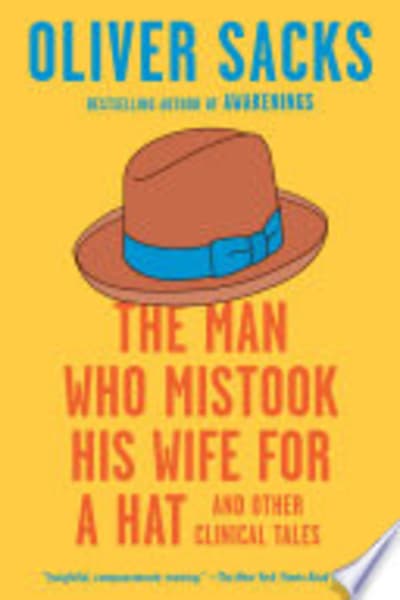
The Man Who Mistook His Wife for a Hat — Book Summary & Review
by Oliver Sacks
Last updated:
The Man Who Mistook His Wife for a Hat Summary
In 'The Man Who Mistook His Wife for a Hat', Sacks explores the complex world of neurological disorders through vivid case studies, like the titular story where a man mistakes his wife for an inanimate object due to visual agnosia. This book is structured into four parts: Losses, Excesses, Transports, and The World of the Simple, each sharing real-life patient narratives that highlight the quirks and challenges of neurological conditions. Sacks's ability to narrate these stories with empathy allows readers to genuinely grasp the daily realities faced by those with conditions such as Tourette's or savant syndrome. However, it's worth noting that Sacks sometimes romanticizes his subjects, which might not sit well with readers seeking rigorous scientific explanations. The book is less about scientific solutions and more about understanding the human condition through the lens of neurology.
Key Takeaways from The Man Who Mistook His Wife for a Hat
-
1
Visual Agnosia: Sacks introduces this condition through a patient who cannot recognize faces, including his wife's, mistaking her for objects.
-
2
The Lost Mariner: A case study of a man stuck in a perpetual present, unable to form new memories due to Korsakov's syndrome.
-
3
Witty Ticcy Ray: Explores a Tourette's patient who finds his tics to be both a hindrance and a source of creativity.
-
4
The Twins: A fascinating look at two savant twins who communicate through shared numerical patterns, revealing unique cognitive abilities.
-
5
The Disembodied Lady: Describes a woman who loses her proprioception, illustrating the profound impact of losing bodily awareness.
Who Should Read This
Someone who finds themselves fascinated by the peculiarities of the human mind and enjoys narrative-driven storytelling. If you're curious about how neurological disorders affect day-to-day life, this book will intrigue you.
Who Shouldn't Read This
If you're looking for a textbook-like dive into neurological science with extensive technical details, this book will disappoint. Those seeking a strictly empirical approach might find Sacks's narrative style and personal observations unsatisfying.
Editor's Verdict
The beauty of this book lies in its empathetic storytelling, exemplified by the section 'The World of the Simple'. Its real limitation is the lack of scientific depth for those seeking extensive technical insight. This book resonates most with those at a crossroads in their understanding of human behavior, seeking to see beyond the ordinary in everyday life.
Ready to read The Man Who Mistook His Wife for a Hat?
Get your copy on Amazon today.
The Man Who Mistook His Wife for a Hat — Frequently Asked Questions
About Oliver Sacks
Oliver Sacks (1933–2015) was a British neurologist and author renowned for his explorations of the human brain. Educated at Oxford University, he specialized in neurology and psychiatry. Sacks gained credibility through his clinical experience and compassionate storytelling, exemplified in "The Man Who Mistook His Wife for a Hat," which details unusual neurological disorders. Other notable works include "Awakenings," documenting his work with encephalitis lethargica patients, and "Musicophilia," exploring music's neurological impact.