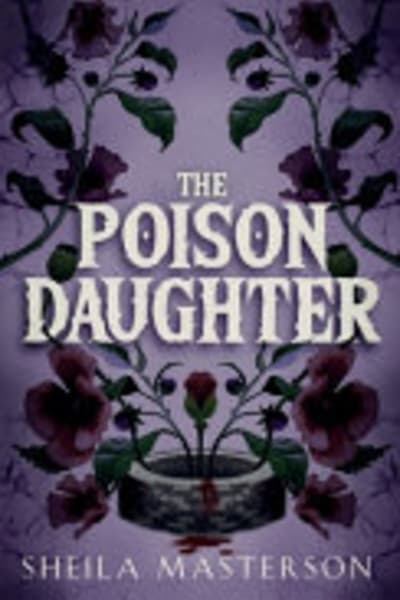
The Poison Daughter — Book Summary & Review
Last updated:
The Poison Daughter Summary
In The Poison Daughter, Sheila Masterson builds the plot around a brutal rule Harlow Carrenwell follows like a ritual: every kiss kills, and the Carrenwell family treats that power as policy. The novel is structured around Harlow’s double life—assassin by day-for-family, vigilante by night for abused women in Lunameade—until the central promise breaks when she kisses her mark and he survives. Masterson then sharpens the stakes by making the “invincible partner” in passion also the person who can see her reality: Henry Havenwood, her new betrothed, who refuses to trade her to rival houses and instead removes her from the board entirely. The early sections make you feel how carefully Harlow performs devotion while counting deaths like inventory, and Masterson keeps returning to the cost of obedience, especially when Henry’s family politics start closing every exit. One concrete sequence that crystallizes the book’s tension is Harlow’s confinement in the mountain fort, where vampire-infested woods turn her skills into liabilities and her usual method—kill with a kiss—becomes useless against the new threats. That’s when the story shifts from revenge logistics to emotional bargaining: Harlow has to get Henry, who already knows her secret, to choose her anyway. The book’s second half leans hard into interrogation-by-intimacy and survival-by-strategy, and Masterson keeps forcing the question of whether love can exist alongside a weaponized body. Honest limitation: if you want a fast, straightforward mystery about “who did what” with minimal romance friction, this won’t satisfy—you’re signing up for a lot of relationship tension and political maneuvering before answers land.
Key Takeaways from The Poison Daughter
-
1
Kiss-and-Death Power: Harlow’s ability works like a guaranteed execution method, shaping every choice and every lie she tells.
-
2
Lunameade’s Walled City: The setting limits escape, turning politics and protection into the same tangled problem for victims.
-
3
Vigilante Moonlighting: Masterson uses Harlow’s secret work to argue that harm done in secret still counts, even when justified.
-
4
Henry Havenwood’s Refusal: Henry rejects the expected family violence and instead controls access, making love a strategy.
-
5
Mountain Fort Confinement: The vampire-infested woods force Harlow to adapt, proving her “skill” is not the same as safety.
Who Should Read This
Someone who likes fantasy romance tangled with family politics and moral grayness will probably enjoy how Harlow’s assassin life collides with Henry’s restraint. If you’re tired of stories where the heroine’s secret is treated like a plot twist instead of a daily burden, this gives you the grind.
Who Shouldn't Read This
If you want a clean, clue-driven thriller with answers arriving at a steady pace, this book’s power-and-relationship tension will feel like drag. If explicit romantic conflict and survival logistics in a confined location aren’t your thing, Harlow’s forced proximity will frustrate you.
Editor's Verdict
The single best thing The Poison Daughter does is make Harlow’s kiss-weapon stop functioning as a simple plot lever, then use Henry Havenwood’s knowledge to turn romance into an active negotiation rather than a reward. The real limitation is that the novel spends a long stretch on political and emotional maneuvering, so readers expecting a tight, mystery-first structure may feel kept waiting. Anyone who’s just gotten sick of “secrets solved by one big confession” will hit hardest when Harlow realizes Henry’s control is subtler than betrayal.
Ready to read The Poison Daughter?
Get your copy on Amazon today.
The Poison Daughter — Frequently Asked Questions
About Sheila Masterson
Sheila Masterson is an author and researcher who writes about historical poisoning cases and the women connected to them. She is credible on this topic because her work is grounded in documented records and careful synthesis of primary sources and established scholarship. Masterson’s book The Poison Daughter examines a poison-related story through historical evidence. She has also written other nonfiction works exploring crime, mystery, and historical figures, though her most widely cited title is The Poison Daughter.