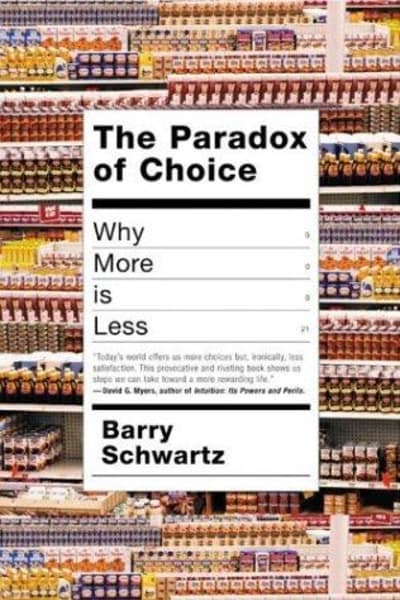
The Paradox of Choice — Book Summary & Review
Last updated:
The Paradox of Choice Summary
In 'The Paradox of Choice', Schwartz presents the concept of the 'maximizer' versus the 'satisficer' as a key psychological framework. This dichotomy is central to his argument that the overwhelming abundance of options in modern life leads to anxiety and regret. Schwartz devotes a chapter to how this choice overload can result in decision-making paralysis, using examples like the multitude of options when buying a simple product like a pair of jeans. He provides eleven practical steps to help readers manage their choices better, aiming to reduce stress and increase satisfaction. The book is structured with engaging anecdotes and synthesizes current research in social sciences to support its claims. However, it doesn't deeply explore cultural or socio-economic factors that might influence an individual's experience of choice overload, which could frustrate those looking for a more comprehensive analysis of choice behavior across different demographics.
Key Takeaways from The Paradox of Choice
-
1
Maximizer vs. Satisficer: Schwartz identifies maximizers as those who seek the best possible outcome, often leading to dissatisfaction.
-
2
Choice Overload: Too many options can overwhelm individuals, causing stress and decision paralysis instead of liberation.
-
3
Regret and Adaptation: Schwartz explains that more choices can lead to increased regret and lower satisfaction with decisions.
-
4
Opportunity Costs: The concept that focusing on what we miss out on can detract from the satisfaction of chosen options.
-
5
Eleven Steps: Schwartz outlines methods to limit and manage choices, like setting personal standards and focusing on what's truly important.
Who Should Read This
Someone who feels overwhelmed by everyday decisions and is searching for strategies to simplify their choices will find this book insightful. If you struggle with anxiety over selecting the 'perfect' option in any area of life, Schwartz offers a fresh perspective.
Who Shouldn't Read This
If you're looking for an in-depth exploration of how cultural or socio-economic backgrounds affect decision-making, this book will disappoint. Schwartz's focus is primarily on individual psychological responses, not broader societal influences.
Editor's Verdict
One of the book's standout achievements is its practical guide, 'Eleven Steps', for reducing choice-related stress. However, it lacks an exploration of cultural influences on decision-making. This book is ideal if you're in a phase of life where decision fatigue is reducing your quality of life, particularly when making everyday choices.
Ready to read The Paradox of Choice?
Get your copy on Amazon today.
The Paradox of Choice — Frequently Asked Questions
About Barry Schwartz
Barry Schwartz is an American psychologist and emeritus professor at Swarthmore College, known for his research in psychology and economics. He authored "The Paradox of Choice: Why More Is Less," which examines how excessive choices can lead to anxiety and decision-making paralysis. Schwartz's credibility stems from decades of academic research and publications in decision-making and behavioral science. Other notable works include "Practical Wisdom" and "The Costs of Living."