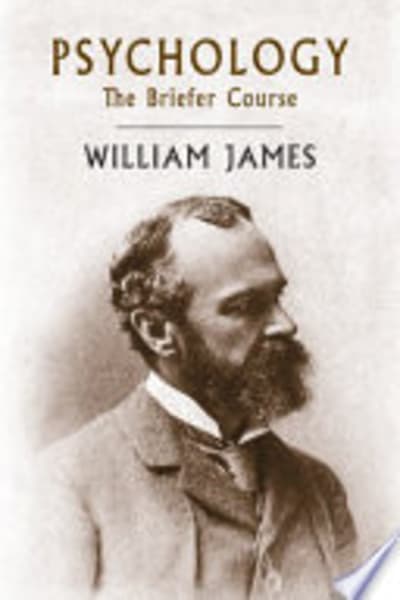
Psychology, Briefer Course — Book Summary & Review
Last updated:
Psychology, Briefer Course Summary
William James introduces the concept of “habit” in Psychology, Briefer Course, framing it as the flywheel of society and the individual. He methodically lays out how habits steer behavior and lock in societal norms, even devoting an entire chapter to the mechanism. James also examines consciousness and the “stream of thought,” offering a baseline account of how reality gets filtered and experienced. The book’s organization makes knotty topics like memory, instincts, and volition easier to follow for readers without a psychology background. Still, it leaves out the first nine chapters found in the original longer version, so the broader context is missing and the omissions feel more like a tease than a choice. James’s analysis is detailed, but it offers little in the way of practical application for modern psychological practice, which will likely irritate anyone hoping for contemporary, usable guidance.
Key Takeaways from Psychology, Briefer Course
-
1
Habit: Described as the flywheel of society and individuals, highlighting its role in shaping behavior and norms.
-
2
The Stream of Thought: James emphasizes the continuous flow of consciousness, likening it to a stream rather than a sequence of ideas.
-
3
The Self: Explored as a multi-layered construct, consisting of the material, social, and spiritual selves.
-
4
Emotions and Will: He examines how emotions influence decisions and the role of will in navigating them.
-
5
The Sense of Time: James investigates how humans perceive time, emphasizing the psychological over the chronological experience.
Who Should Read This
If you're grappling with understanding how habits influence your daily life, this book will offer foundational theories. Someone who enjoys the historical evolution of psychological thought will appreciate James's early contributions.
Who Shouldn't Read This
If you're seeking modern psychological practices or solutions to contemporary issues, this book will not meet your needs. Its historical focus and lack of practical applications may disappoint those looking for actionable advice.
Editor's Verdict
The best aspect of this book is its exploration of 'The Stream of Thought', offering a foundational perspective on consciousness. However, its omission of the first nine chapters from the original text leaves a gap in context. For those reflecting on how past psychological theories influence today's understanding, this book is essential, particularly when revisiting foundational ideas on habits and consciousness.
Ready to read Psychology, Briefer Course?
Get your copy on Amazon today.
Psychology, Briefer Course — Frequently Asked Questions
About William James
William James (1842–1910) was an American philosopher and psychologist, often referred to as the "Father of American psychology." He taught at Harvard University, where he established one of the first psychology laboratories in the United States. His work in psychology and philosophy made him a leading thinker of his time. James is credible on this topic due to his pioneering research and teaching in psychology. Notable works include "The Principles of Psychology" and "The Varieties of Religious Experience."