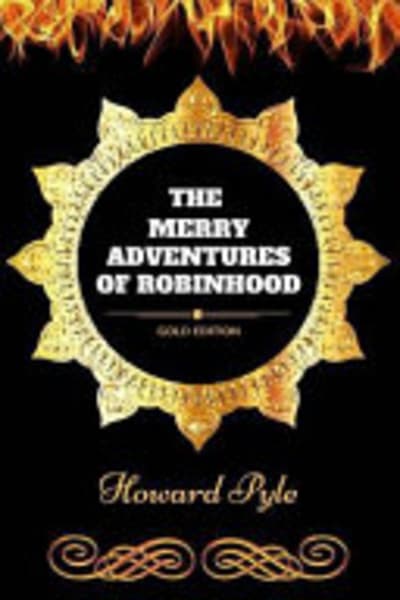
The Merry Adventures of Robin Hood — Book Summary & Review
by Howard Pyle
Last updated:
Public domain via Project Gutenberg — free and legal.
The Merry Adventures of Robin Hood Summary
Howard Pyle’s The Merry Adventures of Robin Hood is built as a chain of episodes in an invented “old English” idiom, so the book reads less like one continuous plot and more like a series of set-piece confrontations. Pyle keeps the cast moving through familiar Robin Hood territory—Nottingham politics, outlaw camaraderie, and the constant push-pull between Merry Men and authority—while using the episodic structure to sharpen character types instead of building suspense. Early on, Robin’s “merry” authority is established through how he settles disputes inside the band, and later episodes turn those same instincts outward against officials who treat the poor as background noise. One concrete example is the way Pyle stages encounters with the Sheriff of Nottingham: the Sheriff isn’t merely an antagonist, he’s a walking engine for cruelty, and each new clash is designed to show Robin’s preferred alternative—fair dealing, clever reversals, and communal loyalty.
Pyle’s style is the real centerpiece. He writes in a deliberately archaic voice that sounds like it’s been polished for children’s ears, with a rhythm that makes violence feel cartoonishly moral rather than psychologically messy. That approach is why the book became influential: it translates ballad material into a coherent, kid-friendly narrative without losing the legend’s swagger. Still, this is not a historically grounded Robin Hood, and it doesn’t try to interrogate the myth; it’s here to entertain and to pass the legend along in a specific tone. If you want realism, interiority, or a modern sensibility about class, you’ll likely feel the edges flatten.
Key Takeaways from The Merry Adventures of Robin Hood
-
1
Episodic structure: Each chapter functions like a standalone Robin Hood incident, emphasizing reversals over long-term suspense.
-
2
Invented “old English” idiom: Pyle’s archaic phrasing is a stylistic choice that keeps the legend child-friendly and rhythmic.
-
3
Merry Men camaraderie: The band’s internal rules and loyalties matter as much as the fights, shaping Robin’s authority.
-
4
Sheriff of Nottingham clashes: The Sheriff is written as a consistent symbol of cruelty, making conflict feel moral and repeatable.
-
5
Ballad-to-narrative adaptation: Pyle compiles traditional material into a coherent story that prioritizes legend continuity.
Who Should Read This
If you’re stuck in a reading rut and want a legend retold with confident, old-fashioned momentum, this will feel like a warm, structured diversion. Someone who enjoys classic kids’ adventure voices—where moral clarity drives scenes—will likely have the most fun with Pyle’s Robin Hood.
Who Shouldn't Read This
If you need modern pacing, subtle character psychology, or historical realism, Pyle’s stylized idiom and moralized violence will frustrate you. If you’re the type who gets bored by episodic plotting, you may feel the book never fully commits to a single sustained arc.
Editor's Verdict
The single best thing Pyle does is turn ballad material into a readable sequence of moral set-pieces, especially through the Sheriff of Nottingham conflicts that keep the stakes legible episode after episode. The real limitation is that the book doesn’t aim for psychological depth or historical grounding; it stays firmly in legend-mode. If you’re a parent or teacher prepping a classic read-aloud, this hits hardest when you want something lively, clear, and safely old-fashioned for a group.
Ready to read The Merry Adventures of Robin Hood?
Get your copy on Amazon today.
The Merry Adventures of Robin Hood — Frequently Asked Questions
About Howard Pyle
Howard Pyle (1853–1911) was an American illustrator and writer known for retelling classic tales for young readers. He studied art and produced widely used historical and literary illustrations, giving him expertise in medieval themes and storytelling. Pyle is credible on Robin Hood because he created and published The Merry Adventures of Robin Hood, a major adaptation that draws on earlier English ballads and legends. He also wrote The Story of King Arthur and His Knights of the Round Table and illustrated collections such as Men of Iron.