The Marvelous Land of Oz — Book Summary & Review
by L. Frank (Lyman Frank) Baum
Last updated:
Public domain via Project Gutenberg — free and legal.
The Marvelous Land of Oz Summary
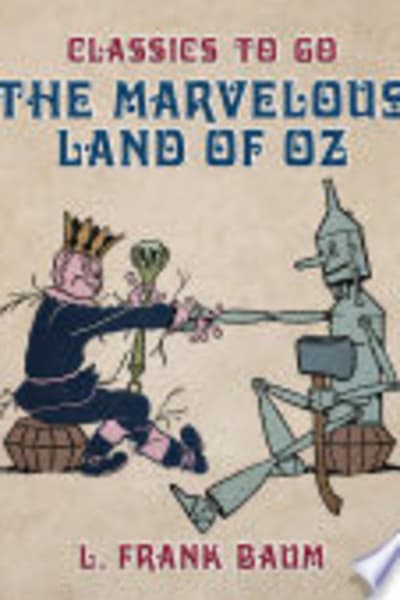
In The Marvelous Land of Oz, Baum keeps the sequel engine running by focusing on “an account of the further adventures” of two familiar figures: the Scarecrow and the Tin Woodman, whose partnership with Oz’s odd rules is the framework the book returns to again and again. Right away, the tone feels less like a grand mission and more like Baum moving pieces across a board: the Scarecrow’s earnest logic and the Tin Woodman’s practical feelings keep colliding with Oz’s whimsical bureaucracies, roadside miracles, and sudden reversals of what “normal” means. One concrete example is the way Baum leans on the Scarecrow’s ability to reason through problems that are, in Oz terms, both literal and symbolic; you’ll see him treated as a kind of living question, not a superhero. Another example is the Tin Woodman’s recurring vulnerability—his heart (and his relationship to it) becomes the emotional lever Baum uses whenever the plot drifts into pure absurdity.
Baum also uses repetition in a smart way: he keeps returning to the same emotional problem—what it means to be “made” for a role—while changing the costume of that problem each time the story crosses into a new locale. The writing is breezy, but it’s not random; Baum’s best trick is making the reader feel like Oz has its own internal logic, even when it’s ridiculous. If you’ve already read The Wonderful Wizard of Oz, you’ll recognize the social rhythm of Oz (characters arriving, explanations arriving late, and moral conclusions arriving sideways). If you haven’t, Baum still gives enough handholds that you won’t feel lost.
The honest limitation: this isn’t a psychologically deep novel, and Baum doesn’t aim to challenge your worldview. It’s also episodic enough that readers expecting tight, modern pacing may feel the seams of the plot showing.
Key Takeaways from The Marvelous Land of Oz
-
1
Scarecrow’s logic: Baum turns “brains” into a problem-solving method, not a personality trait, so plans evolve from questions.
-
2
Tin Woodman’s heart: His emotional stakes are mechanical and literal at once, letting Baum use feelings as plot machinery.
-
3
Oz’s internal rules: Even when events are silly, locations and customs follow consistent cause-and-effect within the world.
-
4
Episodic structure: Scenes stack like illustrated set-pieces, so momentum comes from character reactions more than suspense.
-
5
Baum’s sequel rhythm: Returning characters reset the tone each chapter, creating familiarity while still changing the kind of trouble.
Who Should Read This
Someone who already loves the Scarecrow and Tin Woodman dynamic and wants more of Oz’s weird social logic will have a good time. If you’re craving light, character-driven fantasy after something heavier, Baum’s steady episodic pace will feel comforting.
Who Shouldn't Read This
If you need a tightly plotted, modern thriller structure with escalating stakes, Baum’s loose, fairy-tale sequencing will frustrate you. If you’re looking for psychological realism or social critique, The Marvelous Land of Oz will feel like it’s politely avoiding those targets.
Editor's Verdict
The single best thing Baum does here is keep the sequel’s focus on the Scarecrow and the Tin Woodman as functioning “problem solvers,” so even absurd situations produce meaningful character shifts. The real limitation is that Baum writes for whimsy and moral comfort, not for suspense, and the episodic structure can make the plot feel stitched. This hits hardest for anyone who grew up with Oz stories or is revisiting them mid-life, when you want your imagination fed without homework.
Ready to read The Marvelous Land of Oz?
Get your copy on Amazon today.
The Marvelous Land of Oz — Frequently Asked Questions
About L. Frank (Lyman Frank) Baum
L. Frank (Lyman Frank) Baum (1856–1919) was an American writer and playwright from New York. He wrote The Wonderful Wizard of Oz (1900) and later The Marvelous Land of Oz (1904), drawing on his long career in children’s literature and theatrical storytelling. Baum’s credibility comes from his authorship of the Oz series and his experience writing stage works and popular fiction for young readers. Other notable works include The Wonderful Wizard of Oz and The Road to Oz (1909).