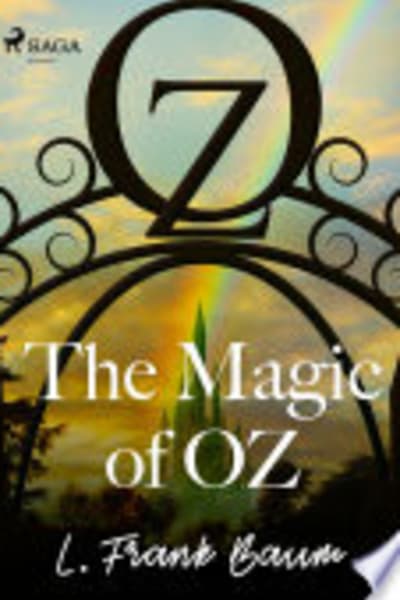
The Magic of Oz — Book Summary & Review
by L. Frank (Lyman Frank) Baum
Last updated:
Public domain via Project Gutenberg — free and legal.
The Magic of Oz Summary
In The Magic of Oz, Baum builds the plot around a birthday errand for Princess Ozma, then detonates it into a chain of detours—enchanted islands, sudden imprisonments, and political backstabbing—that keep Dorothy, the Wizard, and the Cowardly Lion moving long after they’ve “done the job.” This installment, published posthumously in 1919, reads like a late-series sprint: the Emerald City is left behind early, and the story keeps insisting that gifts and goodwill don’t protect anyone from trouble. Baum’s framework is simple but effective—each stop introduces a new set of rules, characters, and moral tests, so the book feels less like one continuous adventure and more like a stack of oddly connected fairy-tale problems. One concrete anchor is the birthday mission itself: Ozma’s celebration is the reason for the journey, and it keeps reappearing as a ticking clock whenever the friends get sidetracked.
Baum also leans hard into tone—whimsical, breezy, and oddly confident that danger can be narrated with a wink. The Wizard’s presence matters because his “authority” is constantly tested by situations that don’t care about titles, while the Cowardly Lion’s fear is treated as both a limitation and a recurring engine for growth. If you know the Oz books, you’ll recognize the rhythm: strange geography, quick alliances, and villains who seem less terrifying than they are annoying and persistent.
Honest limitation: this isn’t a standalone entry for readers who want tight continuity or psychological realism; it assumes familiarity with Oz’s cast and treats plot logic as flexible. If you’re expecting the lush, literary density of later fantasy, Baum’s approach will feel airy and episodic rather than deep.
Key Takeaways from The Magic of Oz
-
1
Birthday errand for Ozma: the “gift” plot functions as a ticking clock that keeps resetting the friends’ priorities.
-
2
Emerald City departure: leaving early signals Baum’s episodic structure—new rules arrive fast, then vanish just as quickly.
-
3
Cowardly Lion’s fear: his anxiety isn’t decoration; it drives decisions and becomes the story’s most repeatable moral test.
-
4
Wizard’s authority: Baum uses situations that ignore rank, making competence matter more than confidence or titles.
-
5
Enchanted island traps: captivity is played for wonder and inconvenience, not for suspense or gritty consequence.
Who Should Read This
Someone who grew up with Oz stories and wants to revisit the familiar cast in a more episodic, prankish late-series setup will likely enjoy this. If you’re currently in a low-stakes reading mood—something you can sample in sittings without worrying about heavy continuity—you’ll probably be happy here.
Who Shouldn't Read This
If you need character development that feels psychologically grounded and cumulative, Baum’s light touch will frustrate you. If you’re the type who wants every plot event to strictly build toward one clear climax, the island-to-island detours will feel like loose ends.
Editor's Verdict
Baum’s best move here is using Ozma’s birthday mission as a structural spine, so Dorothy, the Wizard, and the Cowardly Lion keep re-committing to purpose even as the story swerves. The real limitation is that The Magic of Oz is episodic to the point of feeling patchwork, with weak continuity for anyone who hasn’t read earlier Oz installments. This hits hardest for anyone who’s re-entering Oz after a long gap and wants comfortingly weird problems rather than tight realism.
Ready to read The Magic of Oz?
Get your copy on Amazon today.
The Magic of Oz — Frequently Asked Questions
About L. Frank (Lyman Frank) Baum
L. Frank (Lyman Frank) Baum (1856–1919) was an American author and playwright from New York who wrote children’s literature, including The Wonderful Wizard of Oz (1900), later known through adaptations and reprints as The Magic of Oz. He was credible on this topic because he created the Oz stories himself and published multiple Oz books based on his original characters and world. Other notable works include The Road to Oz and The Marvelous Land of Oz.