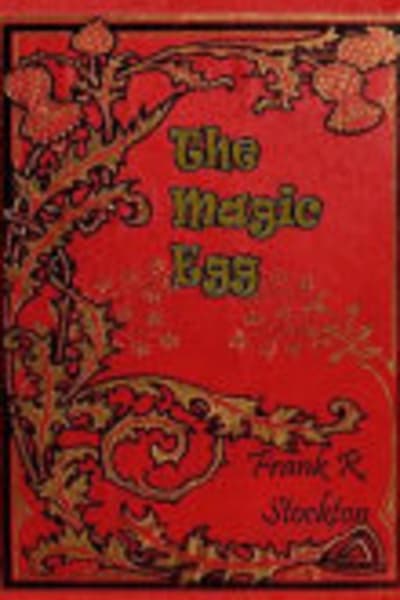
The Magic Egg, and Other Stories — Book Summary & Review
Last updated:
Public domain via Project Gutenberg — free and legal.
The Magic Egg, and Other Stories Summary
In The Magic Egg, and Other Stories, Frank R. Stockton sets up a framing social event—Mr. Herbert Loring’s January theater gathering—then uses that polite, slightly theatrical setup to let each tale slip in a new social experiment. Stockton’s best trick is how he treats manners like plot machinery: in the Unicorn Club world, everyone is performing, and the stories keep asking what happens when performance meets credulity. Loring’s “wonderful things” from the far East aren’t just prop decoration; they create a mood where exaggeration feels acceptable, even fashionable, and that mood becomes the lens for the collection’s recurring targets: vanity, credulity, and the little cruelties people hide behind “good taste.”
The title story, “The Magic Egg,” is where Stockton shows he’s interested in the gap between what people want to believe and what they’re willing to verify. The egg functions less like a magical object than like a social test: who wants to be impressed, who wants to seem sophisticated, and who can’t resist turning mystery into status. Elsewhere, Stockton keeps returning to the same rhythm—setup as conversation, twist as embarrassment, and an ending that leaves you thinking about how quickly a room’s friendliness can curdle into judgment. Even when the stories are light, they’re not neutral; Stockton is quietly grading his characters for their softness, their snobbery, and their hunger for novelty.
One limitation: this collection won’t satisfy readers who want sustained character arcs or a single overarching plot. It’s a set of social sketches, so if you’re hunting for emotional devastation or long-form momentum, Stockton’s gentle, ironic structure may feel like too much surface and too little payoff.
Key Takeaways from The Magic Egg, and Other Stories
-
1
Unicorn Club framing: Loring’s theater gathering turns social manners into the collection’s organizing principle.
-
2
Mr. Herbert Loring’s “far East” tales: Stockton uses travel wonder as a credibility test for the room’s vanity.
-
3
The Magic Egg: the “magic” operates as status bait, revealing who verifies and who performs belief.
-
4
January afternoon performance: the fixed social calendar makes every story feel like a scheduled experiment in taste.
-
5
Stockton’s twist rhythm: setup-as-conversation followed by embarrassment makes irony the main engine of plot.
Who Should Read This
Someone who enjoys fiction where etiquette and small humiliations do the heavy lifting will likely have fun with Stockton’s setup-and-twist pattern. If you’re stuck in a rut reading stories that pretend manners don’t matter, this collection will remind you how social life engineers outcomes.
Who Shouldn't Read This
If you need long emotional arcs, this book’s short-story structure will frustrate you with its quick resets and limited character dwell time. If you dislike ironic social satire and prefer clear moral statements, Stockton’s wry grading of his characters may feel evasive.
Editor's Verdict
The single best thing Stockton does is use the Loring/Unicorn Club performance frame to make belief, taste, and embarrassment feel like one continuous social mechanism, especially around “The Magic Egg.” The real limitation is that the collection offers sketches, not sustained arcs, so you don’t get the kind of cumulative character payoff many readers expect from fiction. This hits hardest if you’re feeling cynical about social performance in your own life—anyone noticing how quickly friendliness becomes judgment will feel the target in their ribs.
Ready to read The Magic Egg, and Other Stories?
Get your copy on Amazon today.
The Magic Egg, and Other Stories — Frequently Asked Questions
About Frank R. Stockton
Frank R. Stockton (1834–1902) was an American writer best known for children’s literature and short fiction. He was born in Philadelphia, educated in the United States, and worked as a journalist and editor before turning to writing. He is credible on the topic of classic children’s stories because he published widely in magazines and produced enduring, widely anthologized tales that shaped later juvenile fantasy. Other notable works include The Lady or the Tiger? and The Great Stone Face.