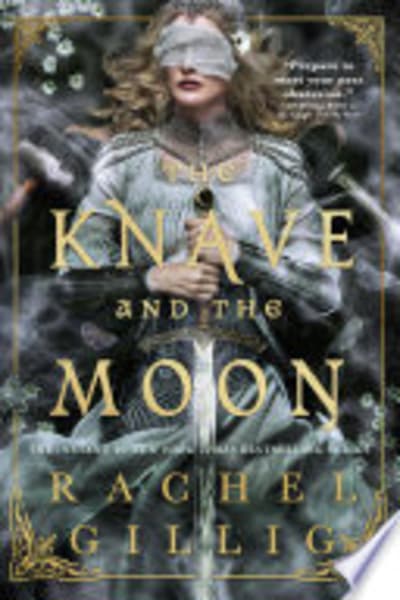
The Knave and the Moon — Book Summary & Review
Last updated:
The Knave and the Moon Summary
In The Knave and the Moon, Rachel Gillig structures the story around a repeating pattern of “stories repeat themselves,” then weaponizes it through Sybil Delling’s vow to vanquish Benji the same way she once did the Omens. After Aisling Cathedral collapses and the rumored-dead trio—Rodrick Myndacious, Bartholomew, and Maude Bauer—haunt the margins, the king’s public wedding to Sybil becomes propaganda: Benji stages tournaments across Traum to display control while Sybil is captive and drugged. The cruelty is practical, not poetic—Sybil is forced to perform while her mind keeps returning to the old ritual logic of the Omens, and Gillig makes that clash the engine of the plot. Then the mysterious knave rises through the lists: nameless, memoryless, and increasingly tethered to Sybil’s chance to undo Benji’s power by attacking Traum’s faith at the source. Gillig leans hard into the sequel’s gothic romantasy tension, but she also escalates the mystery layer by treating tournament outcomes like story beats with consequences. There’s a specific emotional pivot when Sybil realizes the kingdom’s faith isn’t protected by miracles, but by repetition—faith maintained by what people are told to expect. Gillig’s best move is how she turns romantic longing into a political instrument: Sybil’s love isn’t decoration; it’s leverage, and it threatens to collapse the very system that keeps the kingdom coherent. Honest limitation: if you wanted a clean “solved mystery” by the end, this book is more interested in destabilizing certainty than tying every thread into a neat bow.
Key Takeaways from The Knave and the Moon
-
1
Omens: The past mechanism Sybil tries to reenact, functioning like a ritual logic that shapes her choices under captivity.
-
2
Traum tournaments: Benji’s public spectacle that turns belief into a scoreboard, where violence and storytelling reinforce each other.
-
3
Stonewater Kingdom faith: The story treats religion as infrastructure—maintained by repetition, not by divine protection.
-
4
Mysterious knave: A nameless, memoryless figure who tests whether identity can be edited like a narrative.
-
5
Aisling Cathedral ruins: The setting’s collapse mirrors the plot’s theme—when institutions fall, the myths don’t automatically die.
Who Should Read This
If you’re stuck in a rut where every romantasy plot feels like the same emotional beat in different costumes, you’ll likely enjoy how Rachel Gillig makes Sybil’s longing collide with propaganda. If you’ve been craving a sequel that keeps escalating stakes through mystery mechanics—rather than slowing down for cozy worldbuilding—this fits.
Who Shouldn't Read This
If you need a fast, low-confusion plot with immediate answers, you’ll get frustrated by how Gillig privileges thematic repetition over tidy explanations. If you dislike captive-and-drugged setups and want romance that stays emotionally “safe,” Sybil’s situation will feel too grim to enjoy.
Editor's Verdict
The single best thing The Knave and the Moon does is fuse gothic romance with a story-as-power concept, especially through Sybil’s Omens-driven plan against Benji’s tournament propaganda. The real limitation is that the mystery leans more toward destabilizing certainty than delivering clean closure. This will hit hardest for readers who finished The Knight and the Moth and are still hungry for a darker sequel that treats faith like a controllable narrative system.
Ready to read The Knave and the Moon?
Get your copy on Amazon today.
The Knave and the Moon — Frequently Asked Questions
About Rachel Gillig
Rachel Gillig is an author of fantasy and young adult novels. She has written and published widely in the genre, including The Hollow Gods and The Stolen Heir, and is the author of The Knave and the Moon. Her background as a professional novelist and her track record of published fantasy work make her credible to write about mythic, character-driven speculative storytelling.