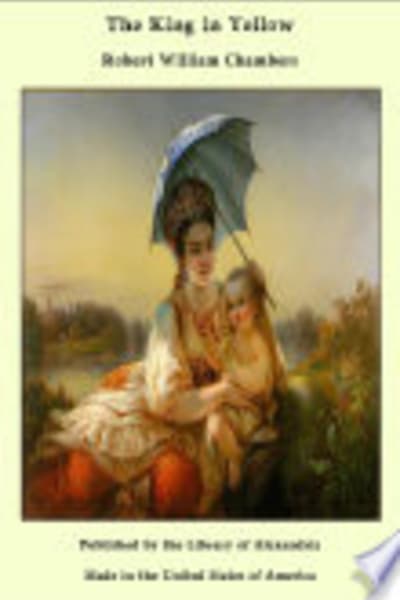
The King in Yellow — Book Summary & Review
by Robert W. (Robert William) Chambers
Last updated:
Public domain via Project Gutenberg — free and legal.
The King in Yellow Summary
In The King in Yellow, Chambers organizes the collection around a recurring menace: the play in “The Yellow Sign” that injures the soul by being read, and the stories keep circling that idea from different angles. The book’s structure matters—each tale behaves like a report from a world where art is a kind of contagion, and the “effect” is literal enough to make you flinch. In “The Yellow Sign,” the narrator’s gradual surrender feels less like gothic scenery and more like a case study in how obsession hollows out a person; you watch dread become routine, then destiny. Chambers also earns his weirdness with craft: the prose is often crisp and matter-of-fact, which makes the supernatural intrusions land harder. When “The Mask” pivots into cult logic, it’s not only that people believe the impossible—it’s that their belief has consequences for time, identity, and moral agency.
The standout for me was how Chambers treats physical reality as negotiable. “In the Court of the Dragon” gives you the “stone” horror—living flesh turning to something inert—not as a jump-scare, but as an outcome of contact with a power system beyond human scale. And “The Street of Four Winds” is the collection’s best late flourish: a traveler loses his bearings and wakes up 400 years earlier, not in a fun alternate-history dodge, but in a world that has moved on without him. Chambers writes with a confidence that the supernatural is consistent, even when it’s cruel.
Limitation: this isn’t a unified novel with one plotline that resolves everything. It’s a set of eerie episodes, so if you want character arcs that close cleanly or a single satisfying explanation, Chambers will frustrate you. You’ll also need patience for archaic diction and a vibe that can feel more “oddly formal” than modern horror.
Key Takeaways from The King in Yellow
-
1
The Yellow Sign: a fictional play whose reading acts like a spiritual toxin, changing perception and behavior in escalating steps.
-
2
The Yellow Sign effect: Chambers frames dread as something contagious and procedural, not a sudden monster encounter.
-
3
The Mask: cult membership functions like an infection network, where belief reorganizes social bonds and personal priorities.
-
4
The Court of the Dragon: the stone transformation treats the supernatural as a mechanics problem, not mere atmosphere.
-
5
Street of Four Winds: time displacement is presented as consequence, making the past feel alien and indifferent.
Who Should Read This
If you’re craving horror that treats obsession as a real physiological hazard—like the moment you can’t stop thinking and it starts thinking back—read Chambers. Someone who likes short stories that circle the same dread concept from multiple angles will probably enjoy how the collection compounds its threat.
Who Shouldn't Read This
If you need a single through-line plot with a tidy ending, you’ll hate how Chambers offers episodes that don’t fully resolve. If you dislike older, formal phrasing and can’t tolerate eerie ambiguity, this collection’s tone will wear thin fast.
Editor's Verdict
Chambers’ best move is the way the collection builds the “read-the-play-and-suffer” premise across stories like “The Yellow Sign” and “The Street of Four Winds,” so the horror feels systematic. The real limitation is that the book is episodic and sometimes frustratingly unresolved, with no single payoff that ties every thread together. This hits hardest for anyone who’s mid-career and suddenly questioning whether their habits—especially obsessive ones—are quietly damaging their inner life.
Ready to read The King in Yellow?
Get your copy on Amazon today.
The King in Yellow — Frequently Asked Questions
About Robert W. (Robert William) Chambers
Robert W. (Robert William) Chambers (1865–1933) was an American writer and artist. He worked as an illustrator and wrote fiction and criticism, publishing in major magazines in the late 19th and early 20th centuries. He is credible on the topic of early weird fiction because The King in Yellow (1895) helped define the era’s occult and psychological horror themes. Other notable works include The Maker of Moons (1923) and The Inmost Light (1894).