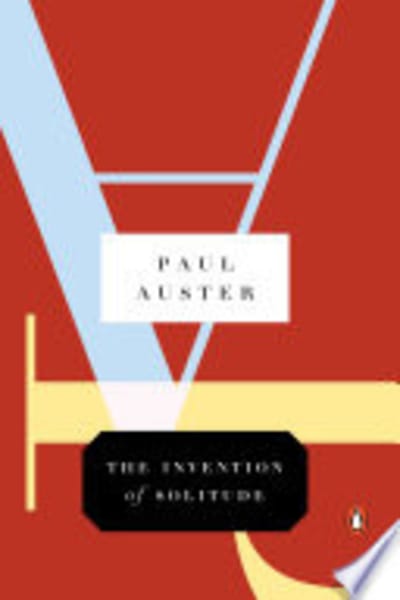
The Invention of Solitude — Book Summary & Review
by Paul Auster
Last updated:
The Invention of Solitude Summary
Paul Auster structures The Invention of Solitude in two parts—“Portrait of an Invisible Man” and “The Book of Memory”—and the book’s real engine is how Auster lets grief and memory argue with each other instead of smoothing out the mess. In “Portrait of an Invisible Man,” Auster confronts his father’s sudden death, and the narration keeps circling the same question: what does a son do when the person who shaped his earliest sense of self is gone without explanation? Auster’s grief is specific, not sentimental; he writes like someone trying to reconstruct a room after the furniture has been removed. The father becomes “invisible” not because the book refuses him, but because Auster shows how the mind edits, blanks, and improvises.
Then “The Book of Memory” shifts gears into Auster’s more essay-leaning mode, where he treats coincidence, fate, and solitude as living forces with their own moods. He doesn’t offer a tidy philosophy; he offers patterns he thinks he recognizes—moments when chance feels like a message, and moments when loneliness feels less like an emotion and more like a method of seeing. Auster also returns to the idea that solitude can be chosen and still hurt, which is where the memoir starts to feel like a blueprint for how an artist survives his own mind.
My limitation complaint is simple: if you’re hunting for a linear, emotionally cathartic narrative, Auster’s second half will frustrate you. It’s more reflective and recursive than plot-driven, and the “opinions” can feel repetitive to readers who want new revelations every few pages. Still, Auster’s craft—especially the way he juxtaposes a father’s absence with his later meditations—makes the book worth the time if you can tolerate thinking that doesn’t resolve neatly.
Enjoyed this one? Read these next.
Top picks in Fathers And Sons, chosen for readers of The Invention of Solitude.
Walden
by Henry David Thoreau
Check price on Amazon
The Road
by Cormac McCarthy
Check price on Amazon
The Brothers Karamazov
by Fyodor Dostoevsky
Check price on Amazon
Zen and the Art of Motorcycle Maintenance
by Robert M. Pirsig
Check price on AmazonKey Takeaways from The Invention of Solitude
-
1
Portrait of an Invisible Man: Auster treats his father’s death as a missing reference point, not a finished story.
-
2
The Book of Memory: Memory is presented as an active editor that shapes meaning after the fact.
-
3
Coincidence: Auster frames coincidence as an emotional interpretation, where the pattern matters more than the event.
-
4
Fate: Fate functions as a pressure on the present, forcing the narrator to read ordinary life for signs.
-
5
Solitude: Solitude is shown as both a chosen stance and a symptom, changing how Auster notices the world.
Who Should Read This
Someone who recently lost a parent—or is still living in the aftershocks—will recognize how Auster writes grief that won’t behave. If you’re trying to understand why your mind keeps replaying certain moments, Auster’s memory-and-meaning approach will feel uncomfortably familiar.
Who Shouldn't Read This
If you want a straightforward memoir with a clear arc and escalating revelations, Auster’s second half may feel like circling rather than progressing. If you dislike reflective, essay-like sections that prioritize atmosphere over plot, you’ll likely find the structure wearing.
Editor's Verdict
The best part is how “Portrait of an Invisible Man” uses the father’s sudden absence to show how memory builds an unstable version of reality. The limitation is that “The Book of Memory” is more repetitive and argumentative than narratively satisfying, so it won’t reward readers seeking momentum. This hits hardest for anyone early in their writing life, especially right after a personal loss, when they’re tempted to turn pain into a neat story.
Ready to read The Invention of Solitude?
Get your copy on Amazon today.
The Invention of Solitude — Frequently Asked Questions
About Paul Auster
Paul Auster (born 1947) is an American writer and filmmaker. He grew up in the United States and studied at Columbia University. Auster is credible on autobiographical and literary self-invention topics because he wrote extensively about memory, authorship, and narrative identity, including The Invention of Solitude (1982), which blends memoir and fiction. He is also the author of The New York Trilogy and Moon Palace.