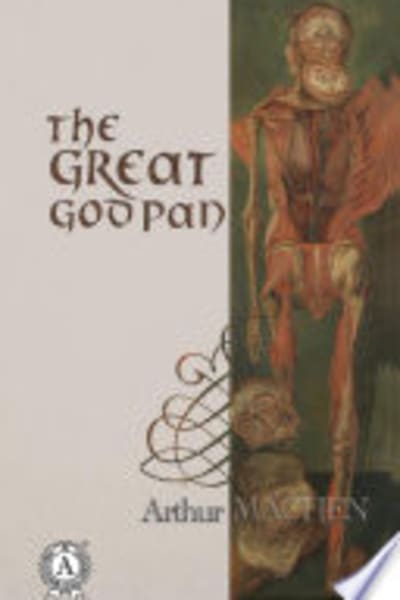
The Great God Pan — Book Summary & Review
Last updated:
Public domain via Project Gutenberg — free and legal.
The Great God Pan Summary
In The Great God Pan, Arthur Machen frames the horror through a pseudo-medical, case-study vibe, then weaponizes it with the book’s central device: a “scientific” gaze that keeps failing to protect anyone. Machen’s story is stitched from interviews, overheard conversations, and the gradually tightening sense that the “curse” isn’t metaphorical—it behaves like biology. The plot funnels toward the moment when the young woman’s parentage and impulses stop being explainable and start acting like a second ecosystem, one that treats ordinary morality as a temporary inconvenience. Machen’s writing is decadent in the old sense: lush descriptions of bodies and rooms, yes, but also a moral chill, the feeling that refinement can coexist with appetite and cruelty.
A concrete example is the way the narrative builds toward the revelation of Pan as a presence rather than a myth. The book keeps returning to the notion that a demi-human inheritance can “shape-shift” social roles—who she is allowed to be, what she desires, and how her body seems to negotiate with forces it can’t name. Machen also uses the story’s investigators as mirrors for the reader’s own curiosity: they want to know, they want evidence, and their pursuit of understanding becomes the mechanism of harm. When Machen leans into the esoteric atmosphere—occult talk, half-defined theories, and the sense of forbidden lineage—the scares land less as jump moments and more as dread with a logic behind it.
Honest limitation: The Great God Pan is short and intentionally sketchy, so if you want a fully grounded explanation, a modern psychological arc, or sympathetic character development, Machen’s deliberate ambiguity will frustrate you.
Key Takeaways from The Great God Pan
-
1
Pan as a presence: Machen treats the god less as a story and more as an active force shaping behavior and bodies.
-
2
Pseudo-medical case-study tone: the narration mimics investigation, making curiosity feel responsible for what follows.
-
3
Decadent atmosphere: lush description isn’t decoration; it creates moral coldness and turns desire into a threat.
-
4
Unnatural parentage as mechanism: inheritance functions like biology, not symbolism, and it drives the plot’s escalation.
-
5
Machen’s ambiguity: explanations stay half-formed, so readers must live with uncertainty instead of closure.
Who Should Read This
Someone who likes weird horror that feels like it has “evidence” behind the nightmare will probably enjoy how Machen builds dread through documentation-like narration. If you’re sick of contemporary jump-scare pacing and want a slow tightening of the screws, this is the right kind of discomfort.
Who Shouldn't Read This
If you need characters who grow in a satisfying way, The Great God Pan will feel more like a disturbing report than an emotional journey. If you’re uncomfortable with occult-flavored sexual transgression and the book’s clinical tone, Machen’s approach will likely grate rather than intrigue.
Editor's Verdict
Arthur Machen’s best move is the pseudo-investigative structure that turns curiosity into complicity, especially as the Pan presence and the “curse” converge in the story’s final turn. The real limitation is that Machen refuses to provide satisfying explanations, leaving the horror suspended in implication rather than resolved in plot. If you’re the kind of reader who wants closure before bed—right after a long workday when you need emotional payoff—this book will feel maddening.
Ready to read The Great God Pan?
Get your copy on Amazon today.
The Great God Pan — Frequently Asked Questions
About Arthur Machen
Arthur Machen (1863–1947) was a Welsh author and journalist. He worked in journalism and later became known for supernatural fiction rooted in folklore, occult lore, and the cultural history of Wales and the borderlands. His credibility on eerie, uncanny themes comes from his long career writing about myth, religion, and the supernatural, including firsthand engagement with Welsh legends. Other notable works include The Hill of Dreams (1907) and The Terror (1917).