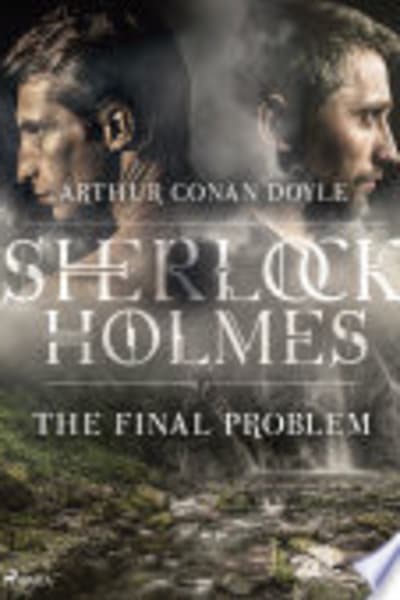
The Final Problem — Book Summary & Review
Last updated:
The Final Problem Summary
In The Final Problem, Conan Doyle arranges the climax around Holmes’s “final” confrontation with Professor Moriarty, then lets the story’s structure do the emotional work: you spend the book waiting for the moment when the case stops being clever and becomes lethal. The narrative is brisk and relentlessly mechanical—plans, disguises, coded movements, and that creeping sense that the city itself is part of Moriarty’s apparatus. Holmes’s last stand isn’t only about solving a puzzle; it’s about choosing what kind of man he is when logic can’t fully control the outcome.
What makes The Final Problem worth your time is how Conan Doyle treats the stakes like engineering. The gang’s organization, the timing of attacks, and the repeated attempts to corner Holmes all feel like pieces of one larger mechanism. The book leans into procedural texture: threats are staged, locations are chosen with intent, and every “turn” has a practical cost. If you’ve read earlier stories, you’ll notice Conan Doyle tightening the screws—less fog, more machinery, and a finale that turns the familiar consulting-detective rhythm into a siege.
Still, there’s a limitation you should know. This isn’t a “new” mystery in the sense of a fresh puzzle box you can savor on its own; it’s a wrap-up built for readers who already care about Holmes and Moriarty. If you come in cold, you may find the character history and stakes slightly under-explained, and the ending will feel less satisfying than it does to fans who’ve tracked the rivalry from the earlier cases.
Overall, The Final Problem reads like Conan Doyle cashing in promises he’s made across the series—fast, tense, and stubbornly committed to resolving Moriarty’s threat in one public, irreversible motion.
Key Takeaways from The Final Problem
-
1
Final Problem framing: Conan Doyle builds the plot around inevitability, where investigation becomes damage control rather than tidy deduction.
-
2
Professor Moriarty’s organization: Moriarty functions like a system, using networks and timing so clues behave like coordinated machinery.
-
3
Holmes’s last stand: Holmes treats the endgame as a test of method, even when method can’t guarantee survival.
-
4
Reichenbach-style emotional gravity: Conan Doyle leans on prior series mythology, so the ending lands hardest if you already know the backstory.
-
5
Consulting-detective rhythm: The story keeps moving through staged threats and location choices, making “casework” feel like logistics.
Who Should Read This
If you’ve already read the Holmes canon and you’re craving the series’ most final-feeling showdown, this is for you. Someone who wants a tight, high-stakes capstone after years of detective banter will feel the payoff most strongly.
Who Shouldn't Read This
If you want a self-contained mystery with lots of standalone context, you’ll likely feel dropped into the middle of a long emotional setup. If you dislike violence-forward climaxes and prefer cozy, clue-first puzzles, Conan Doyle’s siege-like momentum will frustrate you.
Editor's Verdict
The best thing The Final Problem does is turn Holmes vs. Moriarty from a rivalry into a coordinated, city-scale threat, so the finale feels engineered rather than improvised. The real limitation is that it relies on your prior investment in Holmes and Moriarty, so coming in cold blunts both tension and meaning. This hits hardest for anyone who read the earlier Moriarty stories weeks ago and is now ready to see Conan Doyle close the loop for good.
Ready to read The Final Problem?
Get your copy on Amazon today.
The Final Problem — Frequently Asked Questions
About Arthur Conan Doyle
Arthur Conan Doyle (1859–1930) was a Scottish physician and writer. He studied medicine at the University of Edinburgh, practiced as a doctor, and later became known for fiction featuring his detective Sherlock Holmes. His medical training and experience with observation and evidence make him credible for writing about rational problem-solving in The Final Problem. He also wrote The Hound of the Baskervilles and “A Study in Scarlet.”