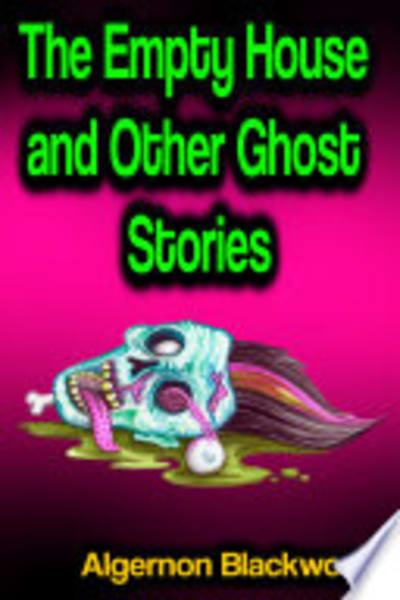
The Empty House and Other Ghost Stories — Book Summary & Review
Last updated:
Public domain via Project Gutenberg — free and legal.
The Empty House and Other Ghost Stories Summary
In The Empty House and Other Ghost Stories, Blackwood organizes the collection around a recurring trick: the supernatural isn’t announced with gore or a jump-scare; it’s smuggled in through sensory overload and the mind’s willingness to misread patterns. The centerpiece, “The Empty House,” uses an almost clinical patience—doors, drafts, and half-heard sounds become evidence in a slow courtroom where the jury is your own nerves. Blackwood keeps returning to this method across the other pieces, so by the time you reach “The Willows,” you can feel the author tightening the same knot: atmosphere first, explanation last, and the reader left to decide whether the world is haunted or merely indifferent.
What makes Blackwood worth finishing is how deliberately he treats fear as a physical environment. In “The Empty House,” the dread doesn’t come from seeing a ghost; it comes from the house behaving like it’s waiting, like it has habits. In “The Willows,” those habits become something more elemental—water, vegetation, and wind stop being scenery and start behaving like a presence. Blackwood’s style also has a signature cadence: long, swaying sentences that mimic the body’s own hesitation when it wants to run but can’t yet justify it.
Honest limitation: this collection won’t satisfy readers who want crisp plot mechanics or a neat final reveal. Some stories end in a haze of implication rather than closure, and if you’re allergic to ambiguity, Blackwood will frustrate you.
Key Takeaways from The Empty House and Other Ghost Stories
-
1
“The Empty House” uses atmosphere as evidence, turning drafts and silence into a case your nerves must prosecute.
-
2
Blackwood’s sensory-first method builds dread without showing a ghost, letting perception do the haunting work.
-
3
“The Willows” treats nature like an agency, where wind and water behave as if they’re listening back.
-
4
Long, swaying sentences in Blackwood mimic bodily hesitation, so fear arrives as rhythm, not shocks.
-
5
Ambiguous endings in Blackwood prioritize mood over mechanics, so you’ll either savor or resent the lack of closure.
Who Should Read This
If you’re the kind of reader who remembers a story by how it felt in your skin—not by what happened—Blackwood is a good bet. Someone who’s tired of horror that explains itself will like how The Empty House and Other Ghost Stories lets dread build in the background.
Who Shouldn't Read This
If you require clear supernatural rules, hard scares, and satisfying endings, this collection will feel evasive. If you hate slow-burn narration that leans on implication, Blackwood’s refusal to pin things down will annoy you.
Editor's Verdict
Blackwood’s best move is the way “The Empty House” turns an ordinary setting into a waiting presence, using sensory detail as the engine of fear. The real limitation is that several stories trade closure for mood, so you may finish unsettled rather than rewarded. This hits hardest for anyone who reads horror to feel dread before sleep, especially after a long day when their imagination is already too active.
Ready to read The Empty House and Other Ghost Stories?
Get your copy on Amazon today.
The Empty House and Other Ghost Stories — Frequently Asked Questions
About Algernon Blackwood
Algernon Blackwood (1869–1951) was an English writer and journalist known for supernatural fiction, including The Empty House and Other Ghost Stories. He drew on firsthand experiences as a traveler and observer of nature, and he wrote extensively about the uncanny and spiritualism, giving him credibility when depicting haunting themes. His work is grounded in detailed atmosphere rather than parody. Other notable works include The Willows and John Silence: Physician Extraordinary.