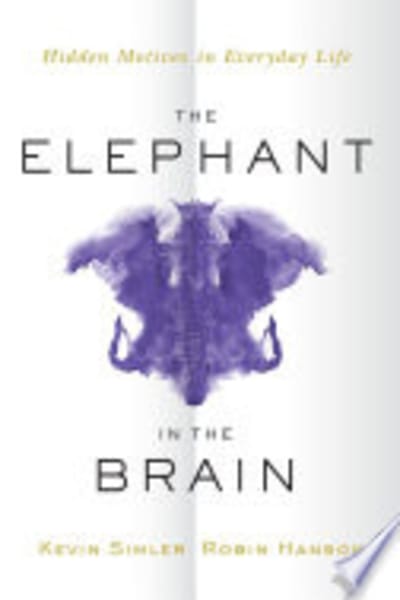
The Elephant in the Brain — Book Summary & Review
by Kevin Simler & Robin Hanson
Last updated:
The Elephant in the Brain Summary
In 'The Elephant in the Brain', Simler and Hanson introduce the concept of 'Hidden Motives', arguing that many of our social behaviors are driven by self-interest we prefer to conceal. The book kicks off with a deep dive into the 'Elephant Theory', which suggests that our conscious mind often avoids acknowledging these motives. Within the section 'Laughter as an Honest Signal', the authors dissect how even our humor is a strategic social tool. Hanson and Simler's exploration extends into institutions like education and politics, positing that these are not purely altruistic endeavors but are also shaped by these overlooked selfish motives. However, if you're looking for a detailed how-to guide on overcoming these unconscious biases, this book might leave you wanting. It’s more of an exposé than a self-help manual, which might frustrate readers seeking direct application in personal development.
Key Takeaways from The Elephant in the Brain
-
1
Hidden Motives: Many social actions stem from selfish motives that we hide even from ourselves.
-
2
Elephant Theory: Our conscious mind deliberately avoids recognizing these self-serving motives.
-
3
Laughter as an Honest Signal: Laughter often serves as a strategic tool in social interactions.
-
4
Conspicuous Consumption: Buying expensive goods is about signaling wealth, not just personal enjoyment.
-
5
Education as Signaling: Schooling often signals competence more than it imparts useful skills.
Who Should Read This
Someone who feels frustrated by the apparent hypocrisy in social and institutional behaviors will find this book enlightening. If you're curious why people act against their stated beliefs, this book offers fresh perspectives.
Who Shouldn't Read This
If you're looking for step-by-step strategies to change your subconscious behaviors, this book won't fulfill that need. Its focus on unveiling hidden motives rather than offering solutions may disappoint those seeking actionable advice.
Editor's Verdict
The best part of this book is its exploration of 'Education as Signaling', which reframes how we view the purpose of schooling. The primary limitation is its dense, academic style that can make for a challenging read. This book hits hardest if you're at a point where you're questioning the true motives behind societal norms.
Ready to read The Elephant in the Brain?
Get your copy on Amazon today.
The Elephant in the Brain — Frequently Asked Questions
About Kevin Simler & Robin Hanson
Kevin Simler is a software engineer and writer with a background in philosophy and cognitive science, contributing to discussions on human behavior. Robin Hanson is an associate professor of economics at George Mason University, with a Ph.D. in social sciences from Caltech, specializing in prediction markets and evolutionary psychology. They co-authored "The Elephant in the Brain," exploring hidden motives in everyday life. Hanson also wrote "The Age of Em" and "The Elephant in the Brain."