The Blank Slate — Book Summary & Review
Last updated:
The Blank Slate Summary
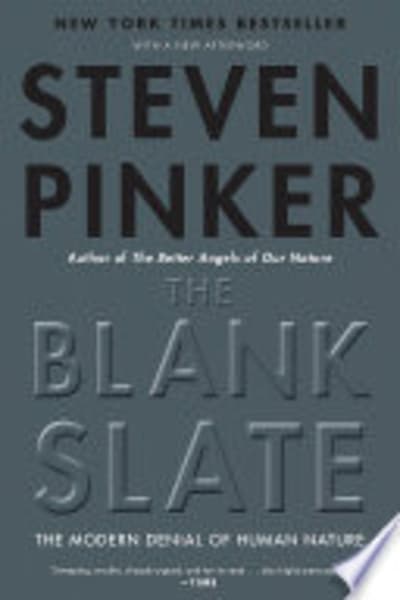
In 'The Blank Slate,' Pinker challenges the idea that humans are born as blank slates, devoid of innate traits. He introduces the 'noble savage' myth in Chapter 3 to dissect how this notion oversimplifies human behavior. Pinker's argument is structured around three key myths: the blank slate, the noble savage, and the ghost in the machine, each examined through scientific and historical lenses. For those interested in the intersection of biology and culture, his discussions on parenting, politics, and the arts are particularly engaging. However, Pinker's reliance on academic jargon might deter readers who prefer straightforward narrative styles. The book doesn't offer an easy-to-digest narrative but rather a dense exploration of complex topics, which might frustrate those seeking quick answers.
Key Takeaways from The Blank Slate
-
1
The Blank Slate: Pinker argues against the idea that the mind is a blank canvas shaped solely by environment.
-
2
The Noble Savage: Challenges the romanticized view of humans in their natural state as peaceful and benevolent.
-
3
The Ghost in the Machine: Questions the dualistic idea that the mind is separate from the physical brain.
-
4
The Tragic Vision: Pinker describes this as accepting human nature's inherent limitations and imperfections.
-
5
The Utopian Vision: Explores the flawed belief that human nature can be perfected through social reforms.
Who Should Read This
If you often wonder how much of who you are is shaped by your genes versus your environment, this book will intrigue you. Someone who debates the ethics of social policies or parenting techniques will find Pinker's arguments particularly relevant.
Who Shouldn't Read This
If you dislike dense academic texts or are looking for a light, narrative-driven read, this book will disappoint. Those uninterested in deep dives into philosophical and scientific debates might find it exhausting.
Editor's Verdict
Pinker excels at dismantling the 'noble savage' myth, providing a fresh perspective on human nature. The book's academic tone can feel cumbersome, especially for those new to the subject. If you're questioning the role of nature versus nurture in your own life, Pinker's insights are invaluable.
Ready to read The Blank Slate?
Get your copy on Amazon today.
The Blank Slate — Frequently Asked Questions
About Steven Pinker
Steven Pinker is a Canadian-American cognitive psychologist, linguist, and popular science author, known for his work in evolutionary psychology and language. He is a professor at Harvard University and holds a Ph.D. in experimental psychology from Harvard. Pinker is credible on the topic of human nature due to his extensive research and publications in psychology and language development. Besides "The Blank Slate," he authored "The Better Angels of Our Nature" and "Enlightenment Now."