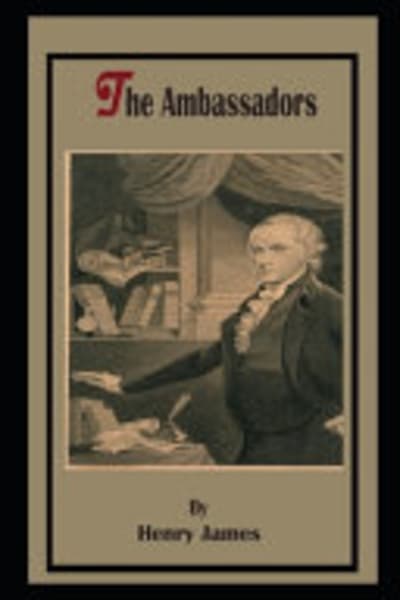
The Ambassadors — Book Summary & Review
by Henry James
Last updated:
Public domain via Project Gutenberg — free and legal.
The Ambassadors Summary
Henry James opens The Ambassadors with a brutally clear setup: Chad Newsome’s “Paris education” is real to him, but it’s also a mission everyone else treats like a rescue. James structures the novel around two simultaneous projects—Mrs. Newsome’s attempt to get Chad back to Woollett, Massachusetts, and Strether’s attempt to persuade himself that staying in Europe is somehow the more honest choice. The first time you feel the trap is when Lambert Strether, sent to retrieve Chad, starts speaking and thinking in the language Madame de Vionnet rewards: slow judgment, cultivated restraint, and the sense that rank and leisure can replace moral clarity. Sarah Pocock, meanwhile, behaves like a human stopwatch; she keeps returning to purpose, propriety, and the terms of the promise Mrs. Newsome makes to Strether. James’s famous tension—what people say they want versus what they actually want—comes to a head when Strether tries to “manage” Chad’s situation while also managing his own enchantment, as if self-control could be negotiated like business terms. There’s a reason the book leaves you unbalanced: the emotional logic of attachment keeps winning against the practical logic of duty, and the novel refuses to declare a clean victor. You watch role reversal happen in real time: Strether becomes the one who needs convincing, while the “rescuer” starts to sound like the romantic. Even the romance of France, which Strether initially treats as a fairytale, becomes a mirror that exposes how easily Americans mythologize experience. The Ambassadors doesn’t tie everything into neat moral accounting; it ends with consequences that feel socially plausible and psychologically messy, like real life when the paperwork is filed but the heart won’t comply. If you want a plot that resolves every motive and closes every account, James will frustrate you.
Key Takeaways from The Ambassadors
-
1
Paris Education: Chad’s Europe isn’t travel; it’s an attitude that rewrites what he thinks he owes.
-
2
Lambert Strether’s Mission: Strether starts as a fixer, then becomes the person being steered by the city and by people.
-
3
Sarah Pocock’s Propriety: Sarah treats manners as enforcement of duty, so small social moves carry big ethical weight.
-
4
Madame de Vionnet’s Strategy: Madame uses rank and flirtation as a method, not a mood, to keep Chad in play.
-
5
Role Reversal in Europe: James makes the rescuer depend on the very enchantment he came to undo.
Who Should Read This
If you’re stuck between “doing the right thing” and “staying loyal to what you feel,” this novel will poke at your excuses with surgical patience. Someone who has recently moved from one life stage to another—new job, new city, new expectations—will recognize how quickly purpose can start sounding like self-deception.
Who Shouldn't Read This
If you need fast action, plain dialogue, and clear moral verdicts by chapter, The Ambassadors will feel like you’re wading through manners. If you dislike psychological ambiguity—where people act politely while wanting incompatible things—you’ll likely resent how little James resolves.
Editor's Verdict
The best thing Henry James does is turn Strether’s retrieval mission into a psychological comedy of errors, especially as Strether’s thinking starts to mirror the language of Madame de Vionnet. The real limitation is that the novel refuses tidy resolution, so readers who want a final accounting of motives and ethics may feel left holding questions. This hits hardest for anyone who’s recently realized they can rationalize anything—mid-career, after a “responsible” decision that still doesn’t feel like the whole truth.
Ready to read The Ambassadors?
Get your copy on Amazon today.
The Ambassadors — Frequently Asked Questions
About Henry James
Henry James (1843–1916) was an American-born novelist and literary critic who became a major figure in English-language fiction. Raised in a cultured household and educated in the United States and Europe, he lived extensively in England and traveled widely, giving him firsthand insight into transatlantic society and manners. He is credible on this topic through his long career writing psychological realism and social observation. Other notable works include The Portrait of a Lady (1881) and The Wings of the Dove (1902).