The Altar of Pergamon — Book Summary & Review
Last updated:
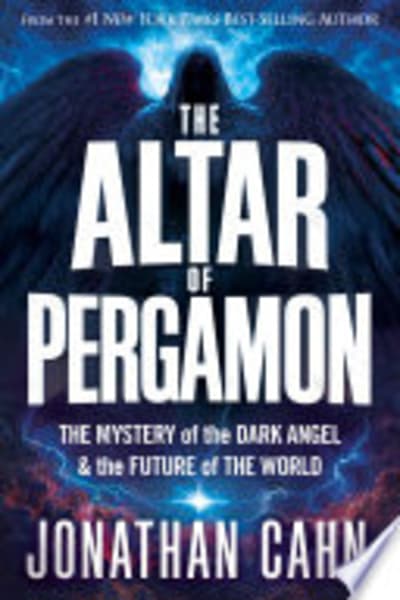
The Altar of Pergamon Summary
The Altar of Pergamon frames its central puzzle through Ariel Herzog, a skeptic who receives a cryptic page from a secret book and then “reads” history through a chain of locations and agents. Cahn structures the novel like a guided scavenger hunt: each stop (New York City, Berlin, Jerusalem, and more) corresponds to a named “revelation,” and the mystery is repeatedly tied to real-world events the author lists—World War I, the rise of the Soviet Union, the Holocaust, nuclear war—so the fiction keeps snapping back to modern headlines. One of the book’s most specific mechanisms is its recurring cast of symbolic antagonists and “keys,” which culminate in set-piece concepts like the “Dark Angel,” the “Man in the Bazaar,” and the “Ancient Matrix.” Herzog’s skepticism is the pressure valve; Cahn uses it to give the reader permission to question the supernatural while still pushing you toward the conclusion that an ancient program is steering modern catastrophe. The novel also leans hard on chapter-style revelations—Cahn names them as if they’re artifacts—so the plot often advances by explanation rather than by surprise.
Here’s the honest snag: The Altar of Pergamon is less interested in character interiority than in presenting a broad, conspiratorial worldview, and it doesn’t slow down to test its own claims. If you want a thriller where clues are fairly earned and the “mystery” is earned through internal logic, Cahn may frustrate you, because the story’s momentum depends on acceptance of the premise that these symbols map onto history. If you can tolerate that, Cahn’s best trick is the relentless linking of the “altar” motif to escalating eras of violence, turning each chapter name into a thematic verdict on what’s “behind” the news.
Key Takeaways from The Altar of Pergamon
-
1
Ariel Herzog: A skeptic protagonist whose doubt functions as a narrative tool to keep the “mystery” plausible.
-
2
The Dark Angel: A recurring symbolic figure meant to unify disparate historical disasters under one hidden agenda.
-
3
Man in the Bazaar: A specific handler-like character concept that delivers “keys” and keeps the plot moving by revelation.
-
4
Ancient Matrix: Cahn’s model for how old patterns allegedly reappear in modern politics, ideology, and war.
-
5
Named revelation chapters: Plot beats arrive as chapter-titled explanations, not gradual clue-collection or character-driven twists.
Who Should Read This
If you’re the kind of person who reads history and then can’t stop asking what invisible forces might connect distant events, this will hook you. Someone who enjoys conspiracy-tinged thrillers and wants a story that repeatedly ties named “revelations” to twentieth-century calamities should try it.
Who Shouldn't Read This
If you want a tightly realistic novel where evidence is weighed and conclusions earn their way through the text, you’ll find Cahn’s leaps exhausting. If you dislike plot that prioritizes named mythic concepts over character growth, you’ll likely bounce off quickly.
Editor's Verdict
The best thing The Altar of Pergamon does is its chapter-by-chapter revelation structure—especially around concepts like the Dark Angel and the Ancient Matrix—so each “stop” feels like a new layer of the same alleged design. The real limitation is that Cahn treats his worldview as fact-adjacent without offering verification inside the story, so skeptics will feel talked past. This hits hardest for conspiracy-curious readers who are burned out on grounded thrillers and want a sprawling mythic explanation for modern history.
Ready to read The Altar of Pergamon?
Get your copy on Amazon today.
The Altar of Pergamon — Frequently Asked Questions
About Jonathan Cahn
Jonathan Cahn is an American author and speaker known for writing about biblical themes and ancient Near Eastern history. He began his career as a teacher and has written extensively on connections between Scripture and archaeology. He is credible on this topic through his long-running research and publication on biblical history and ancient sites, including the ancient Roman and Near Eastern world. Notable works include The Harbinger and The Mystery of the Shemitah.