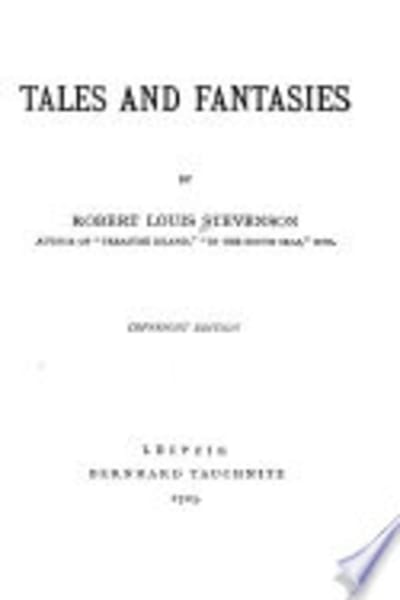
Tales and Fantasies — Book Summary & Review
Last updated:
Public domain via Project Gutenberg — free and legal.
Tales and Fantasies Summary
In Tales and Fantasies, Robert Louis Stevenson frames his title like a promise and then tests it immediately through the skewed, self-informing life of John Varey Nicholson, a man whom Stevenson describes as “stupid,” cheerful in his misread of the world, and therefore easy prey for “superstition” when explanation fails. The story’s opening doesn’t waste time: Nicholson’s physical roundness and casual attitude become a kind of folk-theory for why he keeps falling into trouble, and Stevenson uses that absurd premise to show how people retrofit meaning onto bad outcomes. Nicholson’s “career” is treated like a blank space where conventional philosophy gives up and superstition picks up the microphone. That shift matters—Stevenson is less interested in plot mechanics than in the mental habits that manufacture destiny.
A clear example comes when Nicholson’s social standing and public judgment are described through the narrator’s sneer at Parliament: stupider men sprawl there, praise themselves, and still get to call their own distinction “authorship.” Stevenson keeps returning to that mismatch between self-image and reality, using Nicholson as the private version of the same public delusion. Another example is the way the narrative turns “philosophy” into a silent bystander: the text implies that when rational causation stops, people reach for gods, curses, and personal blame that feels comforting because it sounds explanatory. Stevenson’s fantasy element isn’t dragons or magic; it’s the supernatural tone people adopt when they want the world to make sense.
Limitation: this is not a cohesive novel with a single arc, and if you want sustained psychological realism or a systematic worldview, Stevenson’s short, lightly satirical approach may feel like it’s teasing rather than resolving.
Key Takeaways from Tales and Fantasies
-
1
John Varey Nicholson: Stevenson uses one “stupid” man to expose how self-flattery and bad reading of reality breed misfortune.
-
2
Superstition steps in: When philosophy goes silent, the story shows how people replace evidence with gods and fate to feel in control.
-
3
Parliament satire: The narrator mocks public self-importance, treating political swagger as a mirror of Nicholson’s private delusions.
-
4
Cheerful and cursory reading: Stevenson treats superficial optimism as a cognitive shortcut that turns ordinary errors into “destiny.”
-
5
Philosophy is silent: The text argues that explanation can be a performance, not a truth-seeking process.
Who Should Read This
Someone who keeps making excuses after setbacks—blaming “luck,” “timing,” or invisible forces—will recognize the emotional logic Stevenson skewers. If you’re tired of stories that pretend people always behave rationally, Nicholson’s self-serving explanations will feel weirdly familiar.
Who Shouldn't Read This
If you want a tightly plotted, character-driven novel with a clean ending, this collection-style structure will frustrate you. If you dislike satire that leans on narration and attitude more than on deep interiority, Stevenson’s tone may feel like a tease.
Editor's Verdict
The single best thing Tales and Fantasies does is weaponize its narrator’s switch from “philosophy” to “superstition,” especially through John Varey Nicholson’s blank career space that forces you to watch explanation become a habit. The real limitation is that Stevenson doesn’t offer a consistent, unified argument across a conventional novel arc, so the book can feel like mood and skewer more than resolution. This hits hardest for anyone stuck in a blame loop—mid-career, after a public failure, when you’re tempted to call it fate instead of interrogating your own interpretation.
Ready to read Tales and Fantasies?
Get your copy on Amazon today.
Tales and Fantasies — Frequently Asked Questions
About Robert Louis Stevenson
Robert Louis Stevenson (1850–1894) was a Scottish writer born in Edinburgh, educated in law, and later became a prominent author and travel writer. He is credible on tales and fantasy because he wrote imaginative fiction with strong narrative craft, drawing on firsthand travel experiences and a lifelong interest in storytelling. Notable works include Treasure Island and The Strange Case of Dr Jekyll and Mr Hyde.