Taipei Story — Book Summary & Review
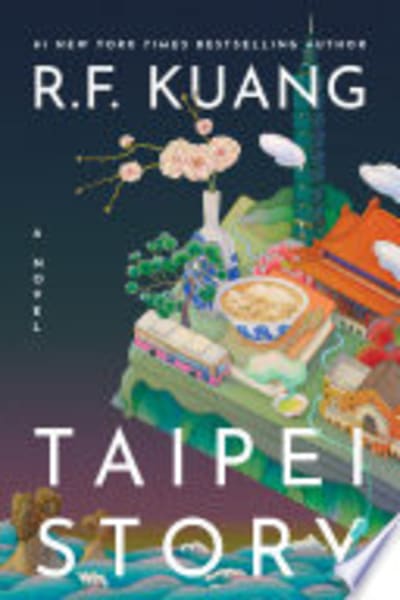
by R.F. Kuang
Last updated:
Taipei Story Summary
In Taipei Story, R.F. Kuang structures Lily Chen’s summer around a language-program rhythm—classroom drills, awkward social rituals, and the slow collapse of the “homecoming” fantasy—and the book’s emotional engine is how those pieces fail to add up to belonging. Kuang keeps returning to Lily’s attempts to translate herself, not just Chinese, as if vocabulary could substitute for family history she’s never been allowed to touch. One concrete anchor is the hot-springs trip (the one that starts as a dare and ends as a rumor factory), which Kuang uses to show how quickly a community decides what kind of “foreigner” you are. The gossip doesn’t arrive as a plot twist; it accumulates like sweat on skin—small humiliations, then a social sentence. After Lily’s grandfather dies, the novel pivots to the grief work Lily avoided: piecing together stories, omissions, and silences through relatives who either dodge or weaponize the past.
Kuang also gives the book a recurring framework of “translation” as an ethical problem. Lily can speak, but her speech keeps missing the point because the people around her carry unspoken stakes—old bargains, old shame, old fear of being asked to account for what happened. Kuang’s writing is sharply funny in the early sections (roommate friction is handled with real bite), then turns devastating when Lily realizes the questions she needs to ask were never “waiting later”; they were waiting before, and now they’re unreachable. The honest limitation: this novel leans more toward character grief and social fallout than toward a full, satisfying explanation of every family mystery, so readers expecting a neat historical reveal or a tightly plotted “answer” arc may feel stalled.
Key Takeaways from Taipei Story
-
1
Language-Program Summer: The book treats intensive classes as a pressure cooker, where fluency can’t fix emotional distance from people.
-
2
Hot Springs Rumor Spiral: Kuang shows gossip as a system—one careless outing becomes communal evidence about who you “really” are.
-
3
Grandfather’s Death Pivot: Grief forces Lily to confront questions she postponed, turning family history into a live wire.
-
4
Translation as Ethics: Kuang frames speaking as responsibility, since words can’t compensate for withheld truths or power imbalances.
-
5
Silences in Family Stories: The novel treats omissions as data, not blanks to fill, and makes readers sit with uncertainty.
Who Should Read This
Someone who’s ever tried to “get closer” to their heritage through language classes or cultural immersion, only to feel more exposed than connected, will recognize Lily Chen’s frustration. If you’re stuck in the loop of rehearsing the right questions in your head—too late, too afraid—this book will hit your nerves.
Who Shouldn't Read This
If you want a mystery that resolves into a clean historical answer, Taipei Story will frustrate you by keeping some family truths stubbornly incomplete. If you dislike novels that linger in social discomfort and grief rather than escalating external action, Kuang’s pacing may feel punishing.
Editor's Verdict
Taipei Story’s best move is how Kuang turns the hot-springs rumor spiral into a lesson about “translation” as ethics, not just communication. The real limitation is that the novel prioritizes emotional and relational consequences over a comprehensive, satisfying explanation of the family history. This lands hardest for anyone in the middle of a heritage-reconnection phase—right when you start realizing belonging isn’t something you study into.
Ready to read Taipei Story?
Get your copy on Amazon today.
Taipei Story — Frequently Asked Questions
About R.F. Kuang
R. F. Kuang (Rebecca F. Kuang) is a Singapore-born, U.S.-based writer known for historical fantasy and literary fiction. She studied at Oxford University and has written extensively about East Asian history and culture, including themes tied to Taiwan’s complex colonial and political past. She is credible on this topic through her research-driven writing and prior work engaging Chinese-language history and identity. Other notable works include The Poppy War trilogy and Babel.