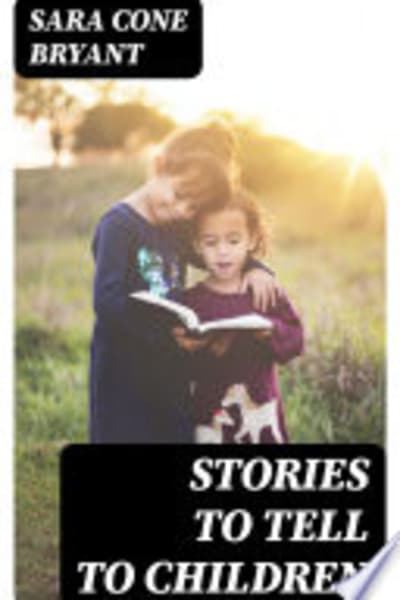
Stories to Tell to Children — Book Summary & Review
Last updated:
Public domain via Project Gutenberg — free and legal.
Stories to Tell to Children Summary
In Sara Cone Bryant’s Stories to Tell to Children, the opening argument is blunt: the teller is free while the reader is bound, and Bryant builds the whole book around that difference. She starts by claiming that spoken stories stay more spontaneous because the mind “lets the story come in the words of the moment,” letting the storyteller use eyes, voice, and body to steer attention. Bryant then pivots to the classroom: when teachers tell instead of read, they can keep children’s eyes on them, adjust expression in response, and avoid distractions that break concentration. That’s the practical engine underneath her praise for an “old, very beautiful art.” Bryant also leans hard into the personal element—she argues that a listener wants the filter of a real person’s enjoyment, which is why a funny story lands differently when it’s delivered by a jolly raconteur than when it sits on a page. She even frames this as a human instinct, stronger in children, who relish what father or grandmother did “when they were little.” The book’s historical sweep matters too: Bryant treats modern storytelling as part of a long chain, from the transmitters of legend in works like the Gesta Romanorum to the age-old grannies of Celtic and Germanic tales. One limitation is that the text is mostly a defense of storytelling as a method and a theory of why it works, not a modern, ready-to-run set of lesson plans with scripted story sessions. If you’re hunting for detailed, classroom-tested story outlines, Bryant’s approach may frustrate you.
Key Takeaways from Stories to Tell to Children
-
1
Teller vs reader freedom: Bryant argues spoken stories flex in real time, while reading locks you into fixed wording.
-
2
Personal filter: She claims children respond to a story shaped by the teller’s enjoyment, not only the plot.
-
3
Teacher attention magnetism: Storytelling helps teachers hold gaze and expression without competing text on a page.
-
4
Spontaneity of moment: Bryant says the mind stays unbound by letting the story arrive in the present words.
-
5
Historical continuity of tellers: She places her method inside a long lineage of legend carriers and folk tradition.
Who Should Read This
If you’re a teacher, parent, or youth leader who keeps losing kids to fidgeting the moment you read aloud, Bryant offers a rationale for switching to storytelling. Someone who wants better control of attention—through voice, eye contact, and timing—will recognize the problem she’s describing right away.
Who Shouldn't Read This
If you want a modern workbook with step-by-step lesson plans and ready scripts, Bryant’s focus on theory and method will feel thin. If you’re expecting a collection of fully developed stories with contemporary pacing cues, you may find the book’s emphasis frustratingly indirect.
Editor's Verdict
The single best thing Stories to Tell to Children does is argue, with classroom practicality, that the teller’s “freedom” creates an immediate connection—an idea Bryant grounds in her emphasis on gaze and expression rather than vague romance about storytelling. The real limitation is that Bryant offers little in the way of modern, usable structure for sessions beyond persuasion and principles. This hits hardest for anyone preparing to lead kids in a group setting and realizing that reading from paper keeps undercutting their control.
Ready to read Stories to Tell to Children?
Get your copy on Amazon today.
Stories to Tell to Children — Frequently Asked Questions
About Sara Cone Bryant
Sara Cone Bryant (1856–1937) was an American writer and educator known for children’s literature. She worked as a teacher and wrote stories for young readers, drawing on her experience with children and her interest in folklore and moral instruction. Her credibility on early-childhood storytelling comes from her long career in education and her focus on age-appropriate narratives. Bryant also wrote The Story Hour and The Story Book of the Bible.