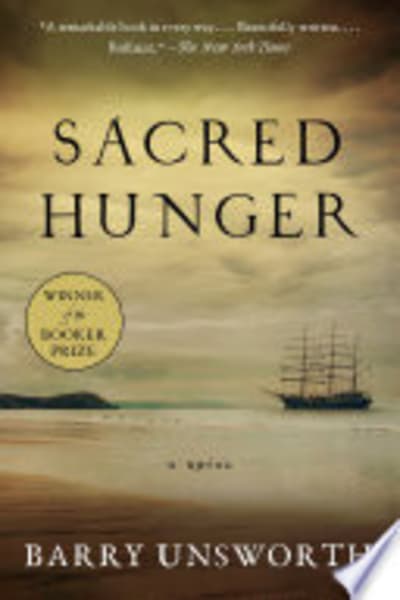
Sacred Hunger — Book Summary & Review
Last updated:
Sacred Hunger Summary
Unsworth’s Sacred Hunger kicks off with William Kemp, an ambitious but increasingly desperate man who wagers everything on a slave ship called the Liverpool Merchant. The novel lays out, with relentless specificity, how the pursuit of wealth corrodes morals and reshapes society around it. Unsworth makes the slave trade’s machinery feel clinical and horrifying, turning the voyage into a tight case study in greed and cruelty. The most arresting material arrives in the mutiny chapter, where enslaved people and the ship’s crew forge an unlikely alliance and attempt to build a utopian society in the Florida wilderness. Still, this is not a casual read: the dense prose and intricate plotting demand sustained attention. Unsworth may capture the era’s grim realities with precision, but he refuses an easy resolution or a tidy redemption arc, which will irritate readers who want a straightforward moral conclusion.
Key Takeaways from Sacred Hunger
-
1
The Liverpool Merchant: Unsworth uses this ship to symbolize the greed and desperation driving the British Empire's slave trade.
-
2
Utopian Society: The mutineers' attempt to build a new community in Florida highlights themes of survival and idealism.
-
3
Kemp's Desperation: His financial ruin propels the story, illustrating the lengths to which individuals go for wealth.
-
4
Disease and Mutiny: The outbreak aboard the ship showcases the chaos and brutality inherent in the slave trade system.
-
5
The Florida Experiment: This failed utopia underscores the challenges of creating an egalitarian society in a world rife with prejudice.
Who Should Read This
Someone who is intrigued by the complexities of historical injustices and enjoys layered narratives that explore moral ambiguity. If you are grappling with understanding the roots of societal greed and power, this book provides a gripping examination.
Who Shouldn't Read This
If you are looking for a fast-paced, straightforward historical adventure, this book's dense prose and intricate narrative may disappoint. Readers who prefer clear moral resolutions may find Unsworth's nuanced portrayal of flawed characters frustrating.
Editor's Verdict
The book excels in its vivid portrayal of the slave trade's brutal realities, particularly in the chapter on the mutiny. However, its dense narrative requires significant reader investment and patience. Anyone deeply interested in the moral complexities of historical injustices will find this book most rewarding when seeking to understand the roots of societal greed.
Ready to read Sacred Hunger?
Get your copy on Amazon today.
Sacred Hunger — Frequently Asked Questions
About Barry Unsworth
Barry Unsworth (1930–2012) was a British author renowned for his historical novels. He was born in Wingate, County Durham, England, and studied English at the University of Manchester. Unsworth's credibility on historical topics stems from his meticulous research and narrative skill, exemplified in "Sacred Hunger," which won the Booker Prize in 1992. Other notable works include "Pascali's Island" and "Morality Play," both of which showcase his talent for weaving rich historical tapestries.