Penrod — Book Summary & Review
Last updated:
Public domain via Project Gutenberg — free and legal.
Penrod Summary
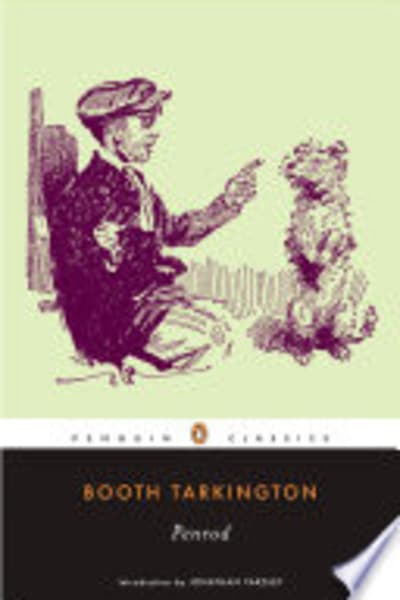
Penrod Schofield is the book’s engine, and Booth Tarkington keeps returning to a simple setup: Penrod’s lies and his dog Duke’s chaos create the school-play messes that force him to improvise his way through boyhood morality. You feel the early-1910s Midwestern air in every scene, but Tarkington’s real trick is the tone—wide-eyed, comic, and faintly sympathetic—so Penrod’s misbehavior never lands as cruelty. One of the clearest structural anchors is the book’s focus on the school play, where Penrod’s schemes collide with other kids’ pride and adults’ impatience. Tarkington makes Penrod narrate like a kid performing for an audience, which turns “trouble” into a kind of accidental theater.
A recurring pattern drives the humor: Penrod tries to control outcomes by telling a story that will make him look smarter, braver, or more wronged than he actually is. When that story unravels, the consequences aren’t moral lectures so much as slapstick escalation—Duke as the loose cannon, classmates as hecklers, and grown-ups as baffled referees. Tarkington also gives you a social map of Indiana boyhood, where reputation travels faster than facts.
There’s a limitation, though: Penrod doesn’t offer much psychological depth beyond what a child would notice. If you want sustained character transformation or modern realism, Tarkington’s 1914-era ideology can feel like a warm blanket that never fully gets pulled off. Still, the ending leaves you with the sense that Penrod’s chaos is part of learning how to live with other people—messily, loudly, and with just enough conscience to matter. By the time you finish, you’ll understand why Tarkington’s comic voice endures, even when his worldview feels dated.
Key Takeaways from Penrod
-
1
Penrod Schofield’s lies function like plot fuel, escalating every scene until Penrod has to improvise a new excuse.
-
2
Duke the dog is the chaos mechanism, turning Penrod’s careful plans into physical comedy and social embarrassment.
-
3
The school play structure keeps the book unified, with each rehearsal mishap revealing how boys negotiate status.
-
4
Booth Tarkington’s adult figures act as blunt constraints, not mentors, which makes the children’s logic feel loud and real.
-
5
1914-era ideology shows up as gentle social policing, where “growing up” means learning manners and boundaries.
Who Should Read This
Someone who’s dealing with a stubborn habit of talking themselves into trouble—then scrambling to fix it—will recognize Penrod’s frantic logic. If you’re nostalgic for small-town boyhood conflicts and want comedy with a soft landing, Tarkington’s Penrod fits the bill.
Who Shouldn't Read This
If you’re looking for modern interiority, trauma-level stakes, or sharp social critique, Penrod will feel shallow and overly cushioned. If you prefer tight realism over caricatured narration, Tarkington’s comic exaggeration may wear you down before the school-play arc finishes.
Editor's Verdict
The single best thing Booth Tarkington does is build comedy around cause-and-effect in the school-play setup, especially the way Penrod’s lying snowballs into public embarrassment. The real limitation is that Tarkington stays mostly at the level of boyish observation, offering little psychological or moral complexity beyond the jokes. This book hits hardest for anyone who remembers being blamed for something they didn’t fully understand—or for anyone who’s about to meet a new group and is already anxious about looking foolish.
Ready to read Penrod?
Get your copy on Amazon today.
Penrod — Frequently Asked Questions
About Booth Tarkington
Booth Tarkington (1869–1946) was an American novelist and playwright from Indiana. He grew up in Indianapolis and worked as a journalist, which informed his detailed portrayals of Midwestern life and childhood. He is credible on Penrod’s subject because he wrote extensively about American youth and social behavior, drawing on firsthand observation. Notable works include The Magnificent Ambersons and The Gentleman from Indiana.