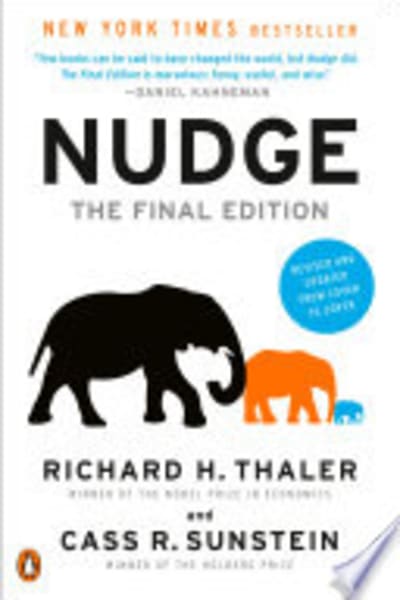
Nudge — Book Summary & Review
by Richard Thaler & Cass Sunstein
Last updated:
Nudge Summary
Thaler and Sunstein kick off 'Nudge' by introducing the concept of libertarian paternalism, which proposes a gentle way to influence people's decisions while preserving their freedom of choice. They explore this through real-world examples, such as the Save More Tomorrow plan, which encourages employees to increase their savings rates gradually. The book is structured around various psychological biases and heuristics, illustrating how these can be leveraged for better decision-making. In the chapter 'Resisting Temptation,' the authors discuss methods to combat procrastination and impulsive behavior, using nudges to guide better financial and health choices. However, 'Nudge' doesn’t deeply explore how these frameworks could be applied in non-Western cultures, which might frustrate readers looking for a more global perspective on decision-making strategies.
Key Takeaways from Nudge
-
1
Libertarian Paternalism: Balances guiding choices without restricting freedom, exemplified by default options like organ donation registration.
-
2
Choice Architecture: The idea that how choices are presented can significantly influence decisions, as seen in cafeteria food placement.
-
3
Save More Tomorrow: A program designed to increase employee savings gradually, tied to future salary raises.
-
4
Status Quo Bias: People favor current conditions, leading to inertia; nudges exploit this by making beneficial options the default.
-
5
Anchoring: Initial numbers influence decision-making, like setting high initial prices to steer perceptions of value.
Who Should Read This
If you're struggling to make better financial decisions or want to help others improve theirs, this book offers practical strategies. Someone who feels overwhelmed by too many choices and wants a framework to simplify decision-making will find it useful.
Who Shouldn't Read This
If you're looking for deep cultural analyses or applications beyond Western contexts, this isn't the book for you. Those who prefer detailed narratives or storytelling over academic frameworks might find 'Nudge' too theoretical and dry.
Editor's Verdict
The best part of 'Nudge' is its practical application of choice architecture, notably the Save More Tomorrow program. However, the book feels overly focused on Western examples, limiting its universal applicability. If you're at a crossroads in your financial planning or need a fresh perspective on decision-making, this book might be the nudge you need.
Ready to read Nudge?
Get your copy on Amazon today.
Nudge — Frequently Asked Questions
About Richard Thaler & Cass Sunstein
Richard Thaler is a Nobel Prize-winning economist known for his work in behavioral economics, particularly in decision-making processes. Cass Sunstein is a legal scholar specializing in constitutional law and behavioral economics. Both are credible on the topic of "Nudge" due to their extensive research on how small interventions can influence behavior. Thaler authored "Misbehaving," and Sunstein wrote "The World According to Star Wars," further establishing their expertise in understanding human behavior and decision-making.