Northern Lights — Book Summary & Review
by Nora Roberts
Last updated:
Northern Lights Summary
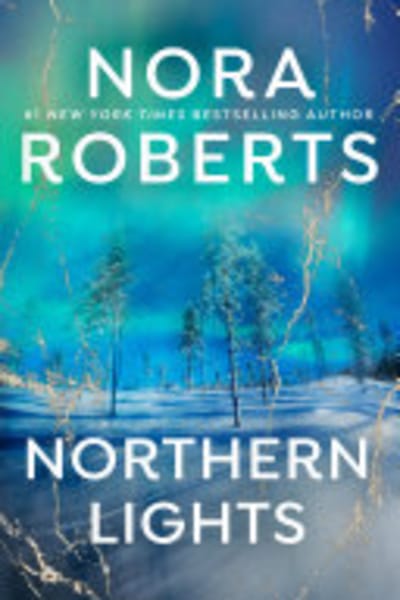
Northern Lights is paced around Nate Burke’s New Year’s Eve decision—he’s hired as chief in Lunacy, Alaska, while still bleeding from the death of his partner in Baltimore—and Nora Roberts keeps tightening the screws on that guilt until it has to collide with desire. Roberts also threads the romance through the town’s law-and-weather reality: Nate isn’t brooding in a vacuum, he’s managing a remote department where every call feels bigger because help is far away. The book’s structure leans on repeated “stay a little longer” moments, with the Northern Lights functioning as more than scenery; they’re the emotional weather that finally breaks Nate’s self-punishment. One of the most concrete pivots comes early, when Nate takes the job even though he knows he’s running from something, then the story forces him to confront why he can’t outrun it. Roberts then escalates the romance with the New Year’s Eve kiss, framed like a choice rather than a random spark—Nora Roberts makes Nate feel temporarily brave, and then makes him pay attention to what that bravery costs.
Still, Roberts doesn’t give you a forensic mystery or a hard-edged police procedural. The investigation work stays functional, mostly there to justify character proximity and test Nate’s competence, not to deliver a twisty case you’d discuss with your book club. If you came looking for a deeply layered exploration of trauma recovery with clinical clarity, you may find the emotional arc more comforting than messy. It’s ultimately a romance that uses policing as texture, and the Alaska setting as atmosphere, not as a thesis. That limitation is the trade: the book is built to satisfy longing and second chances, not to challenge your assumptions about how grief works.
Enjoyed this one? Read these next.
Top picks in Love, chosen for readers of Northern Lights.

The Love Hypothesis
by Ali Hazelwood
Check price on Amazon
Impossible
by Danielle Steel
Check price on Amazon
A Wrinkle in Time
by Madeleine L'Engle
Check price on Amazon
The Road Less Travelled
by M. Scott Peck
Check price on AmazonKey Takeaways from Northern Lights
-
1
New Year’s Eve decision: Roberts turns the holiday into a moral checkpoint, forcing Nate to choose between escape and commitment.
-
2
Lunacy, Alaska policing: The department’s remoteness drives stakes; cases exist to pressure relationships, not to dominate the plot.
-
3
Baltimore partner death guilt: Nate’s trauma functions as a repeating obstacle, showing how he self-punishes before he can accept love.
-
4
Northern Lights as emotional weather: The sky imagery tracks Nate’s internal shift, making romance feel like relief earned, not luck.
-
5
Chief of Police role: Nate’s competence is the credibility engine—Roberts uses small leadership choices to earn trust quickly.
Who Should Read This
Someone who’s stuck in a rut of heavy, plot-driven fiction and wants a romance where the stakes feel grounded in small-town responsibility. If you like your healing arcs to arrive through action, banter, and weather-heavy atmosphere, not therapy-speak, you’ll likely enjoy Northern Lights.
Who Shouldn't Read This
If you want a serious, twist-forward police procedural with a case you can analyze like a thriller, this will feel thin—Roberts keeps the investigation secondary. If you dislike romance that leans on comfort and inevitability, you may find the emotional pacing too smooth for your taste.
Editor's Verdict
Northern Lights works best when Nora Roberts uses Nate Burke’s New Year’s Eve kiss as a decision point, not a mood swing, and then ties that moment to his chief-of-police responsibilities. The real limitation is that the police plot stays mostly functional, with no deep mystery engine or sustained investigative payoff. This hits hardest for readers who are craving romance-as-relief—especially anyone who’s just burned out on grim dramas and wants guilt, tenderness, and Alaska to share the same page count.
Ready to read Northern Lights?
Get your copy on Amazon today.
Northern Lights — Frequently Asked Questions
About Nora Roberts
Nora Roberts is an American novelist known for romance and romantic suspense. She began writing professionally in the 1980s and has published numerous bestselling novels, establishing credibility through a long track record of writing and research-driven storytelling. Her work often draws on detailed settings and character-driven plots. Notable other works include The Witness and The Obsession.