Esio Trot — Book Summary & Review
by Roald Dahl
Last updated:
Esio Trot Summary
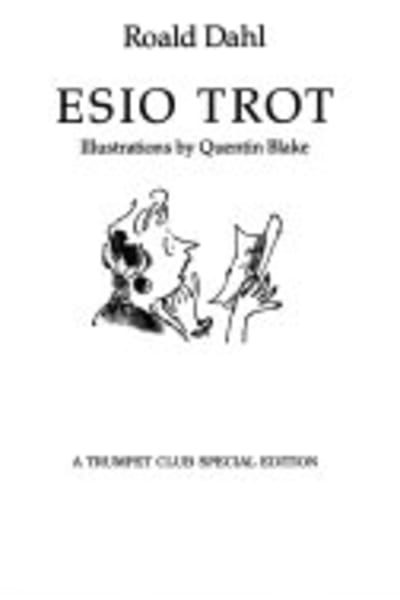
Esio Trot runs on a simple, mischievous structure: Mr. Hoppy’s problem is solved through an “ancient spell” that lets him borrow other people’s attention—specifically Mrs. Silver’s—by using her pet tortoise, Alfie, as the emotional gateway. Roald Dahl sets the premise with crisp clarity: Mrs. Silver is devoted to Alfie, while Mr. Hoppy is stuck loving from the sidelines because she doesn’t even truly acknowledge him. So Mr. Hoppy does what Dahl’s characters often do—he chooses the most ridiculous plan imaginable, then commits to it with full sincerity.
The story’s engine is the transformation itself: Mr. Hoppy turns himself into a tortoise (or, at least, a believable enough imitation that the household accepts it), and the book leans hard into the comedy of mistaken identity. Dahl’s humor isn’t random; it’s built around scale and secrecy. The “140 special tortoises” are not decorative—they’re the logistical nightmare that makes the magic feel like a real operation, complete with practical obstacles and escalating absurdity. When Mrs. Silver finally pays attention, it’s not because Mr. Hoppy has changed into a different man; it’s because Dahl makes love look like a matter of who gets seen, who gets noticed, and who gets to belong in someone’s daily routine.
One concrete example: the moments where Mr. Hoppy tries to manage Mrs. Silver’s expectations while staying hidden reveal how much of romance here is performance under pressure. Another: the book keeps returning to Mrs. Silver’s tunnel vision for Alfie, then weaponizes it—gently—so she can’t help but look up. This is a short, juvenile fiction romp, not a novel with psychological depth or a long arc of character development.
Key Takeaways from Esio Trot
-
1
Ancient spell: The “magic” functions like a social strategy, not fantasy fireworks—Mr. Hoppy uses it to redirect attention.
-
2
140 special tortoises: The joke stays grounded in logistics, showing how romantic schemes unravel when scaled up.
-
3
Alfie as emotional gateway: Dahl treats the pet’s bond as the real relationship lever, with romance piggybacking on routine affection.
-
4
Mr. Hoppy’s secrecy: The story frames love as risk management—what you hide determines what you can safely hope for.
-
5
Mrs. Silver’s tunnel vision: Her devotion to Alfie acts like a fixed lens, and the plot works by bending that lens.
Who Should Read This
If you’re craving a short, funny romance where the “confession” arrives through absurd logistics rather than speeches, this will fit the mood. Someone who wants a Dahl story they can finish in one sitting—then discuss with a grin—should pick up Esio Trot.
Who Shouldn't Read This
If you want romance that prioritizes emotional realism over comic deception, Esio Trot will feel lightweight and a bit evasive. If you dislike magic used as a practical workaround (instead of a wonder in itself), Dahl’s premise will start to grate quickly.
Editor's Verdict
Esio Trot’s best move is how Dahl makes the “ancient spell” feel like a workable plan by anchoring the humor in the “140 special tortoises” problem-solving. The limitation is that it offers almost no sustained character interiority—Mr. Hoppy and Mrs. Silver stay more types than deeply explored people. This hits hardest for anyone who’s burned out on heavy relationship stories and wants a brisk, silly reset before bed.
Ready to read Esio Trot?
Get your copy on Amazon today.
Esio Trot — Frequently Asked Questions
About Roald Dahl
Roald Dahl (1916–1990) was a British author and storyteller from Wales. He worked as a fighter pilot during World War II and later became a widely published writer. Dahl is credible for children’s fiction like Esio Trot because he wrote numerous books specifically for young readers, using sharp observation of everyday behavior and relationships. Other notable works include Charlie and the Chocolate Factory and James and the Giant Peach.