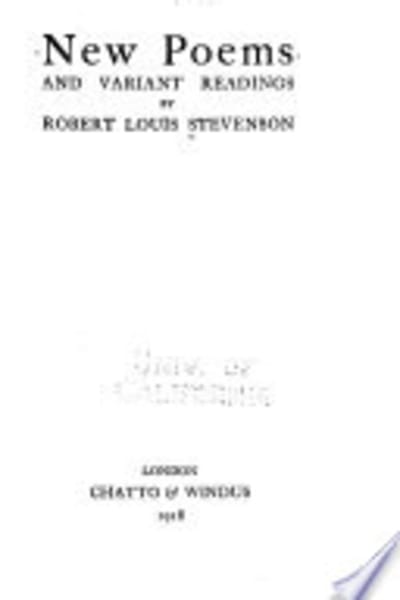
New Poems, and Variant Readings — Book Summary & Review
Last updated:
Public domain via Project Gutenberg — free and legal.
New Poems, and Variant Readings Summary
Robert Louis Stevenson’s New Poems, and Variant Readings is organized around the tension between finished pieces and the “variant readings” that show how each poem was assembled, revised, and sometimes quietly abandoned. The book doesn’t pretend revision is glamorous; it treats the reader like a witness. Stevenson last name matters here because the collection is basically Stevenson studying his own drafts in public, letting you watch choices harden into style. One clear throughline is his preference for controlled music—meter you can feel, images that arrive with purpose—yet the variants repeatedly expose how close he often came to doing something looser, stranger, or more sentimental.
A good concrete anchor is the section where the text toggles between a “final” poem and earlier versions, so you can compare line-level decisions rather than just admire the outcome. In practice, this means you’ll notice Stevenson tightening diction, swapping a phrase for one that lands with better rhythm, and trimming rhetorical padding. Even when the changes are small, the effect is big: the poem stops sounding like it’s explaining itself and starts sounding like it’s listening. Stevenson also uses the variants to show how tone can be engineered—how a single adjective can turn wonder into irony, or tenderness into performance.
The honest limitation is that this isn’t a poetry collection for people who want a clean, uninterrupted sequence of “best poems.” It’s more rewarding if you like craft—if you’re willing to read drafts and tolerate occasional repetition. If you want emotional immersion only, the variant apparatus may feel like scaffolding you can’t unsee, and you may end up skimming the comparisons instead of living inside the lines.
Key Takeaways from New Poems, and Variant Readings
-
1
Variant Readings: Stevenson prints alternate lines so you can track how rhythm and tone are manufactured, not merely admired.
-
2
Finished vs. Draft: The book treats “final” poems as outcomes of decisions, making revision feel like the real authorial voice.
-
3
Line-Level Tightening: Stevenson frequently replaces phrases to improve cadence, showing how micro-edits change the poem’s emotional temperature.
-
4
Tone Engineering: Small diction shifts in the variants can flip irony, tenderness, or sincerity without changing the core subject.
-
5
Self-Comparison Method: Stevenson’s arrangement asks you to read like an editor—compare, question, and accept that earlier versions still matter.
Who Should Read This
Someone who enjoys seeing how poems are built—especially if you’ve ever wondered why a published line “works”—should read this. If you’re in the middle of revising your own writing and feel stuck, Stevenson’s variant comparisons will give you a concrete model for what to change first.
Who Shouldn't Read This
If you want a traditional poetry experience with no interruptions from earlier versions, this will frustrate you. If you’re looking for a single narrative argument or themes laid out like a manifesto, Stevenson’s structure will feel too craft-driven and too fragmentary.
Editor's Verdict
The best thing Stevenson does here is make revision audible: the variant readings let you see how cadence and tone are tuned at the line level, not waved away as “inspiration.” The real limitation is that the collection’s value depends on your willingness to read comparisons, and it won’t satisfy readers who only want polished, continuous poems. This hits hardest for someone right before they submit a draft—when you’re deciding whether to cut, swap, or rewrite and need evidence that small edits matter.
Ready to read New Poems, and Variant Readings?
Get your copy on Amazon today.
New Poems, and Variant Readings — Frequently Asked Questions
About Robert Louis Stevenson
Robert Louis Stevenson (1850–1894) was a Scottish novelist, poet, and essayist, educated in law and trained as a writer through extensive literary work. He published New Poems (1888) and Variant Readings (1894), making him credible on poetry and textual variation. His familiarity with authorship, revision, and publication practices comes from his own writing career. Other notable works include Treasure Island and The Strange Case of Dr Jekyll and Mr Hyde.