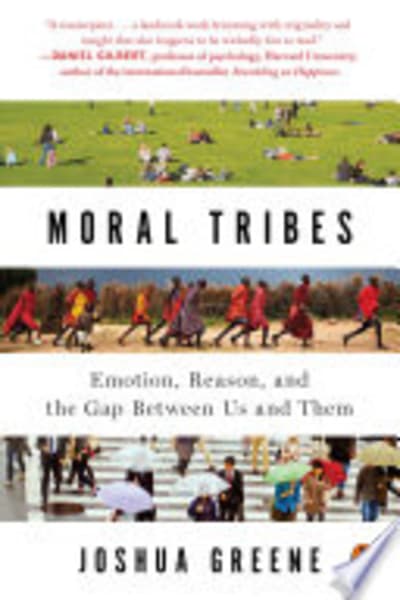
Moral Tribes — Book Summary & Review
Last updated:
Moral Tribes Summary
Joshua Greene introduces the concept of the “tragedy of commonsense morality” to explain why moral conflicts are so common in a world that forces strangers into shared spaces. His argument is built from neuroscience, psychology, and philosophy, trying to pin down where these clashes come from and what might reduce them. A standout chapter, “The Moral Machinery,” lays out dual-process theory of moral judgment, spotlighting the tug-of-war between emotional impulses and rational deliberation. Greene contends that instincts shaped for tribal life don’t translate cleanly to a globally connected society. Still, the book refuses to become a comprehensive, step-by-step guide for resolving specific moral disputes, which will frustrate readers who want concrete answers for real-world controversies.
Key Takeaways from Moral Tribes
-
1
Tragedy of Commonsense Morality: Greene's term for conflicts arising when different moral systems intersect in a globalized world.
-
2
Dual-Process Theory: Our moral judgments are driven by both emotional reactions and rational thought, often clashing with each other.
-
3
Us vs. Them Mentality: A naturally evolved instinct that leads to conflict by favoring one's own group over outsiders.
-
4
Deep Pragmatism: Greene's proposed approach to finding common ground by prioritizing practical over ideological solutions.
-
5
Moral Machinery: An exploration of how our brains' evolved functions affect modern moral decision-making.
Who Should Read This
Someone who struggles with understanding why moral debates seem so intractable and wants a scientific perspective on the matter. If you're grappling with conflicts in personal or professional settings, this book offers a framework to better understand these dynamics.
Who Shouldn't Read This
If you're looking for a handbook with step-by-step solutions to moral disagreements, this isn't for you. Greene's focus is more on explaining why conflicts occur than on providing direct resolutions.
Editor's Verdict
The book excels at dissecting the 'Us vs. Them Mentality' and how it shapes our moral conflicts. However, it doesn't provide actionable steps for resolving these conflicts in daily life. Best suited for readers who are academically curious about the psychological roots of moral conflicts and want a deep dive into the science behind them.
Ready to read Moral Tribes?
Get your copy on Amazon today.
Moral Tribes — Frequently Asked Questions
About Joshua Greene
Joshua Greene is a professor of psychology at Harvard University, specializing in moral judgment and decision-making. He holds a Ph.D. in philosophy from Princeton University, enhancing his credibility in discussing moral and ethical issues. Greene's research combines psychological experiments with philosophical inquiry, making his insights in "Moral Tribes" particularly authoritative. Besides "Moral Tribes," he has contributed to the field with works like "The Cognitive Neuroscience of Moral Judgment" and various academic articles on related topics.