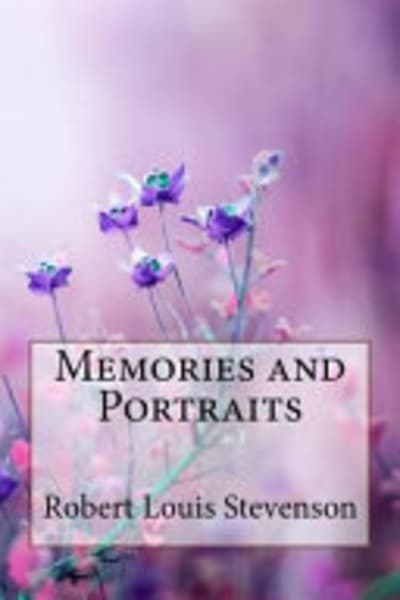
Memories and Portraits — Book Summary & Review
Last updated:
Public domain via Project Gutenberg — free and legal.
Memories and Portraits Summary
In Memories and Portraits, Robert Louis Stevenson frames the book as “unconnected” papers held together by a “thread of meaning,” and he’s right: the collection reads like a life assembled from fragments rather than a single straight autobiography. The opening movement is childhood and youth—memories that feel intimate enough to be embarrassing—yet Stevenson keeps insisting he didn’t plan to be a chronicler. He says he was “led away” by beloved memories and by regret for the dead, and that motive matters because it explains the book’s emotional logic: he writes to keep the vanished people and versions of himself from dissolving.
One of the strongest recurring engines is his attention to “portraits,” the people who have gone before us “in the battle-taken together.” These sketches don’t work like polite character studies; they’re closer to a recurring cast in a private play, where each remembered figure adds a new angle to the face he lost and “found awhile.” Stevenson’s best trick is that he makes the reader feel the accidental nature of the construction—your sense of narrative arrives after the fact, the way you realize you’ve been building meaning without noticing.
A concrete example of how the collection holds together is the way childhood recollection keeps echoing in later portraits: the “young face” appears in the well, and suddenly the book’s fragments start acting like evidence in a case he never formally argued. The limitation is real: if you want plot, unity of time, or a clear thesis you can summarize in one paragraph, you may feel frustrated—this isn’t that kind of book, and dipping into it at random will flatten what Stevenson is doing.
Key Takeaways from Memories and Portraits
-
1
Thread of meaning: Stevenson binds separate papers by recurring emotional motives—memory, regret, and the face he lost and found.
-
2
Accidental autobiographical design: He claims no initial plan to be autobiographical, so the “life story” emerges after you read, not before.
-
3
Portraits as evidence: Each “portrait” functions like testimony from the past, changing how you interpret the narrator’s present self.
-
4
Battle-taken together: The phrase turns history into companionship with the dead, making personal grief feel shared rather than private.
-
5
The well and the young face: The “well” image acts as a structural hinge—childhood reflections return as a recurring visual metaphor.
Who Should Read This
Someone who’s been stuck rereading the same kind of memoirs and wants something looser, stranger, and more emotionally honest will likely enjoy Stevenson’s method. If you’re grieving a person or a version of yourself and can’t stand tidy “lessons,” this book’s portrait-driven structure will feel right.
Who Shouldn't Read This
If you’re hunting for a conventional, chronological autobiography with clear progress from chapter to chapter, Stevenson’s “unconnected” papers will feel like a tease. If you dislike lyrical, fragmentary writing and prefer argument-heavy nonfiction, you’ll probably bounce off the collection’s mood-first construction.
Editor's Verdict
The single best thing Memories and Portraits does is make its collage structure feel purposeful—Stevenson’s “thread of meaning” turns fragments into a coherent emotional account, especially through the return of the “young face” motif. The real limitation is that it offers no sustained plot or thesis you can track step-by-step, so readers who want clear scaffolding will feel stranded. This hits hardest for anyone late at night, after a loss, when you don’t want answers—you want company with the dead and a self that looks back without flinching.
Ready to read Memories and Portraits?
Get your copy on Amazon today.
Memories and Portraits — Frequently Asked Questions
About Robert Louis Stevenson
Robert Louis Stevenson (1850–1894) was a Scottish novelist, essayist, and travel writer. He was educated in Scotland and worked as a writer throughout his adult life, producing firsthand accounts of people and places he observed. He is credible for writing Memories and Portraits because he published extensive memoir-like essays and biographical sketches drawn from his experiences. Other notable works include Treasure Island (1883) and The Strange Case of Dr Jekyll and Mr Hyde (1886).