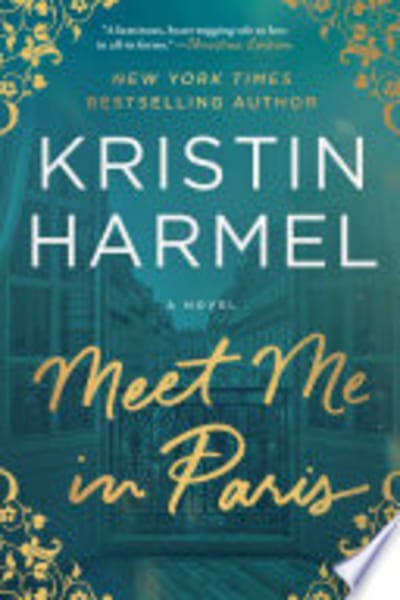
Meet Me in Paris — Book Summary & Review
Last updated:
Meet Me in Paris Summary
Meet Me in Paris is built around a single-week structure where Julia Glover’s “last trip” countdown in the City of Light quietly braids together four other American lives, and Kristin Harmel keeps snapping those threads back into focus whenever you start to drift. Harmel doesn’t rely on one big mystery; she relies on pattern and pressure. Julia, bringing her 23-year-old daughter Piper to Paris, is forced to decide what honesty looks like when time is running out, and Harmel gives that conflict teeth by putting it next to small, specific Paris rituals—late-night conversations, overlooked corners of a neighborhood, the kind of “we’ll do it tomorrow” regret that hits hardest when tomorrow is stolen. Harmel’s Piper plot lands in the warm, messy space between romance and identity: she meets a French waiter who doesn’t try to fix her, just sees her clearly enough to make her choices feel real.
Meanwhile, Jackson Quick’s reunion tour storyline gives the book a second engine: fame as a costume you can outgrow. Harmel threads that into Henry McGee’s secret, too—Henry has written love songs for decades for Celeste, the woman he thinks died in World War II, until a letter arrives and shoves his entire emotional timeline into the present. Even the older love-and-memory story has a craft-y trick: songs become a bridge back to who Celeste was, not a magic wand. And Melody’s subplot—her husband’s affair, her question of whether forgiveness is owed—keeps the book from turning into pure romance frosting.
Honest limitation: if you want one emotionally dominant storyline with a tightly engineered payoff, Harmel’s multiple POVs and overlapping arcs will feel sprawling, and the “redemption” notes may read a little too neat for readers who prefer ambiguity.
Key Takeaways from Meet Me in Paris
-
1
One Magical Week: The whole novel runs on a compressed Paris timeline, so every choice feels urgent and irreversible.
-
2
Julia’s “last trip” clock: Harmel uses mortality as a practical problem—what to say, what to postpone, what to stop pretending.
-
3
Jackson Quick’s reunion tour: Fame is treated like a relationship you can outgrow, not a permanent identity.
-
4
Henry’s Celeste letters: The story reframes love songs as memory tools, especially when dementia blurs the past.
-
5
Melody’s forgiveness dilemma: The affair plot pushes readers to ask whether forgiveness is a gift or an obligation.
Who Should Read This
Someone who’s carrying a “we don’t have time” feeling—grief, a family deadline, or a relationship that’s changed—will recognize their own urgency in Julia’s countdown. If you like layered romance with WWII echoes and music-as-memory stakes, Harmel’s Paris week structure will keep you oriented.
Who Shouldn't Read This
If you hate multi-POV novels and want one central plotline without detours, the intertwined American cast will feel too crowded. If you’re allergic to emotionally reassuring endings or tidy redemption arcs, Harmel’s tone may frustrate you.
Editor's Verdict
Kristin Harmel’s best move is how she turns Paris into a pressure cooker for multiple relationships, especially in the Celeste/letter thread where songs act like a memory bridge rather than a cheat code. The limitation is that the book’s promise of “several intertwined stories” stretches into a sprawling, sometimes uneven braid of arcs. This will hit hardest for anyone who’s recently lost someone (or watched a parent decline) and wants comfort without losing emotional specificity—right after the first wave of shock, when you’re still bargaining with time.
Ready to read Meet Me in Paris?
Get your copy on Amazon today.
Meet Me in Paris — Frequently Asked Questions
About Kristin Harmel
Kristin Harmel is an American novelist and former journalist. Her fiction often draws on historical settings and the emotional realities of wartime Europe, making her credible for stories set in Paris. She is the author of Meet Me in Paris and other novels including The Sweetness of Forgetting and The Room on Rue Amélie.