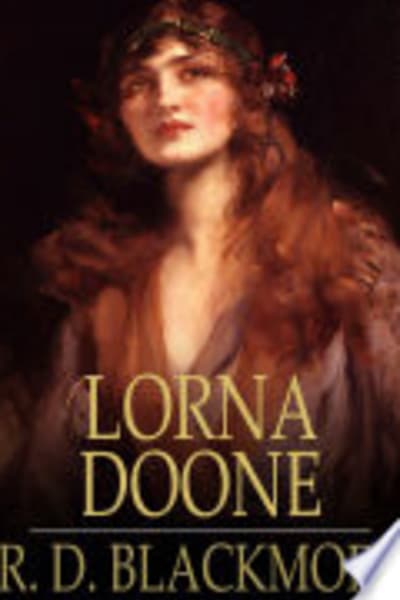
Lorna Doone: A Romance of Exmoor — Book Summary & Review
by R. D. (Richard Doddridge) Blackmore
Last updated:
Public domain via Project Gutenberg — free and legal.
Lorna Doone: A Romance of Exmoor Summary
The first thing Blackmore makes you notice in Lorna Doone: A Romance of Exmoor is the book’s switching gear between social history and melodrama—he keeps returning to the same Exmoor power struggle, then yanks you back into romance and revenge. The opening frames the Doone family as a force you can’t simply ignore, and Blackmore builds the feud like a weather system: slow pressure, then sudden violence. One of the clearest structural signals comes when the story locks into the “Doone” conflict around the time the narrative turns toward John Ridd’s training and his growing entanglement with Lorna. Blackmore’s historical texture is doing real work here: you feel the farmers’ precarious lives, the local loyalties, and the way “respectability” can be just another uniform.
Blackmore also knows how to make the romance matter without treating it as decoration; Lorna isn’t only a love interest—she’s a living consequence of the feud. When John Ridd starts acting less like a bystander and more like someone who has to choose sides, the book’s emotional math sharpens fast. The writing can be lush to the point of repetition, but the village-by-village details keep paying off, especially when Blackmore uses landscape as an argument: Exmoor isn’t scenery; it’s the system that shapes rumor, pursuit, and survival.
Still, this is not a novel for readers who want tight pacing or modern psychological realism. If you’re allergic to long stretches of dialect, local customs, and plot that leans on coincidence and inherited enmity, Blackmore will frustrate you. Also, the book’s “historical” aspect stays broad rather than rigorously explanatory—think atmosphere and consequence more than documented history.
Key Takeaways from Lorna Doone: A Romance of Exmoor
-
1
Exmoor as a pressure-cooker: Blackmore uses landscape to control who can move, hide, and retaliate, making geography drive plot.
-
2
The Doone feud framework: family power operates like local law, so every romantic choice carries political risk.
-
3
John Ridd’s side-switching: his development is less therapy and more accountability—he learns what loyalty costs in practice.
-
4
Lorna’s constrained agency: she’s not passive, but her options narrow because the feud turns intimacy into leverage.
-
5
Blackmore’s historical atmosphere: the “farmers’ lives” portion reads as social texture, not a documented argument.
Who Should Read This
Someone who is craving a full-bodied historical romance with real countryside texture, and who doesn’t mind feuds taking over the emotional weather, should read Lorna Doone. If you’re in a mood for a story where love and power are inseparable and you want to watch loyalty get tested scene by scene, this will fit.
Who Shouldn't Read This
If you need modern pacing, lean prose, and psychological subtlety that feels earned in every paragraph, Blackmore’s sweeping narration will wear you down. If you want history that explains itself with facts and analysis rather than mood and consequence, you’ll feel the book’s historical layer stay stubbornly impressionistic.
Editor's Verdict
The single best thing Blackmore does is braid romance into the mechanics of the Doone feud, so John Ridd’s decisions feel like political acts, not decoration. The real limitation is that the novel’s historical texture favors atmosphere and repetition over tight, modern pacing. This hits hardest for anyone who grew tired of sleek contemporary thrillers and wants a slower, countryside-driven story where love inherits consequences.
Ready to read Lorna Doone: A Romance of Exmoor?
Get your copy on Amazon today.
Lorna Doone: A Romance of Exmoor — Frequently Asked Questions
About R. D. (Richard Doddridge) Blackmore
R. D. (Richard Doddridge) Blackmore (1825–1900) was an English novelist and physician. He practiced medicine and later worked as a writer, producing historical and regional fiction. Blackmore was credible to write about Exmoor because he was an English author whose work drew on the landscapes, local history, and rural life of southwest England. Besides Lorna Doone: A Romance of Exmoor (1869), he wrote The Maid of Sker (1872) and Clara Vaughan (1873).