Life of Pi — Book Summary & Review
by Yann Martel
Last updated:
Life of Pi Summary
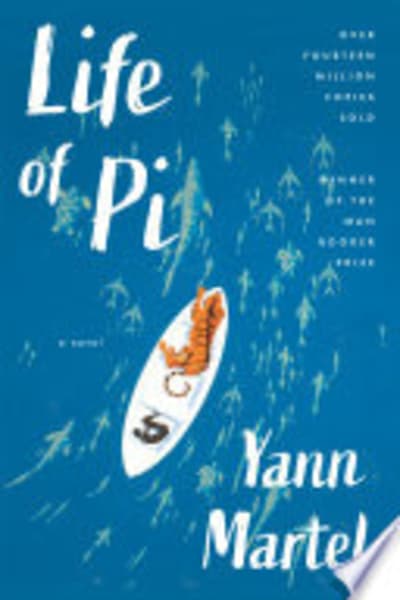
Yann Martel's 'Life of Pi' opens with an audacious premise: a sixteen-year-old boy named Pi Patel shares a lifeboat with a Bengal tiger named Richard Parker after a shipwreck. Martel uses this extraordinary scenario to explore themes of survival, faith, and the human-animal bond. The book is divided into three parts, with the second part, 'The Pacific Ocean,' detailing Pi's harrowing 227-day ordeal at sea. Martel's narrative is rich with symbolic meaning and philosophical musings, particularly focusing on Pi's multifaceted religious beliefs and the techniques he employs to coexist with the tiger. However, readers looking for straightforward adventure might find Martel's frequent philosophical digressions and the book's deliberate pacing frustrating. The novel's ambiguous ending will intrigue some while leaving others seeking more concrete answers.
Key Takeaways from Life of Pi
-
1
The Three-Toed Sloth: Martel uses this animal as a metaphor for the slow relentlessness of survival in extreme conditions.
-
2
Richard Parker: The tiger's name, derived from a clerical error, symbolizes the blending of human and animal instincts in Pi.
-
3
The Algae Island: This surreal place represents the thin line between salvation and danger in desperate situations.
-
4
Pi's Prayer Mat: A symbol of his commitment to spirituality, blending Hindu, Christian, and Muslim practices to maintain hope.
-
5
Carnivorous Island: An allegory for the deceptive nature of safety and the importance of vigilance even in apparent sanctuary.
Who Should Read This
Someone who is grappling with questions of faith and the role it plays in challenging circumstances will find this book meaningful. If you're at a crossroads in life, questioning your beliefs or identity, Pi's journey offers deep reflections worth considering.
Who Shouldn't Read This
If you crave fast-paced adventure without philosophical detours, this book may not satisfy. Those who prefer clear-cut endings might find the book's ambiguous conclusion unsatisfying.
Editor's Verdict
Martel's depiction of the lifeboat survival scenario, especially in 'The Pacific Ocean,' is its standout feature. However, the philosophical digressions can slow the narrative for those seeking pure adventure. This book is perfect for anyone at a spiritual crossroads, seeking to explore themes of faith and survival in an imaginative context.
Ready to read Life of Pi?
Get your copy on Amazon today.
Life of Pi — Frequently Asked Questions
About Yann Martel
Yann Martel, born June 25, 1963, in Salamanca, Spain, is a Canadian author renowned for his novel "Life of Pi," which won the Man Booker Prize in 2002. Martel's background in philosophy and religious studies lends credibility to his exploration of spirituality and survival in "Life of Pi." He was educated at Trent University in Ontario. Other notable works include "Beatrice and Virgil" and "The High Mountains of Portugal," which also explore complex themes through imaginative narratives.