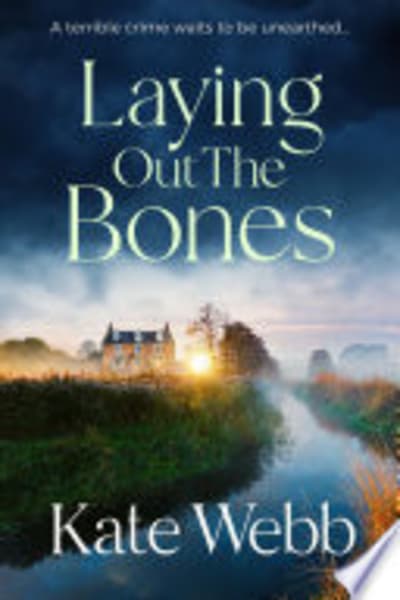
Laying Out the Bones — Book Summary & Review
by KATE. WEBB
Last updated:
Laying Out the Bones Summary
DI Matt Lockyer’s second case in Kate Webb’s Laying Out the Bones kicks off with a very specific framework: a Wiltshire heatwave, a sudden downpour, and flash floods that unearth Lee Geary’s skeleton like a bad secret finally getting dragged into daylight. Webb structures the mystery around what the bones can prove versus what witnesses and institutions refuse to connect. After forensic testing links the remains to Geary, reported missing nine years earlier, Lockyer (and DC Gemma Broad) presses on the uncomfortable gaps: Geary was known to be a drug user, and he had learning disabilities—so why was he alone on the Plain? Webb then tightens the screw by anchoring the investigation to the earlier Holly Gilbert murder, the year Geary disappeared, and to the fact that two other persons of interest in the Holly Gilbert case have died or vanished since.
The book’s best move is how Webb lets time do the storytelling work. You don’t get a clean “then and now” reveal; you get a slow accumulation of contradictions—who was questioned, who was dismissed, and how a missing man becomes both suspect and missing piece. There’s a particular chapter rhythm where Lockyer’s field questions and Broad’s legwork alternate, and the narrative keeps returning to the same unsettling question: coincidence, or a string of murders that waited nearly a decade to be named? Webb’s plotting is stingy with comfort, and when the second twist lands, it feels less like a trick and more like the overdue consequence of bad assumptions.
Honest limitation: if you want a cozy whodunit with lots of suspects introduced on page one, Webb withholds that pleasure—some backstory is delivered only when the investigation forces it, and the emotional interiority stays fairly restrained.
Key Takeaways from Laying Out the Bones
-
1
Wiltshire Plain timeline: the plot uses weather and delayed discovery to make nine years feel present, not historical.
-
2
DI Matt Lockyer method: Lockyer treats institutional records like suspects, questioning what gets written down and what doesn’t.
-
3
DC Gemma Broad legwork: Broad functions as the practical counterweight, turning small inconsistencies into workable leads.
-
4
Lee Geary misadventure vs murder: the book tests whether “obvious explanations” are excuses, not answers.
-
5
Holly Gilbert case echo: the earlier murder keeps resurfacing as a structural device, linking deaths and disappearances.
Who Should Read This
If you’re the kind of reader who keeps a mental checklist of inconsistencies in crime reports, Laying Out the Bones will reward your patience. Someone who’s recently burned through fluffier mysteries and wants a Wiltshire-set investigation built on time gaps and institutional blind spots should give Webb a shot.
Who Shouldn't Read This
If you need a fast cast introduction and lots of courtroom-style clarity, Webb’s slow-burn reveals will feel withholding. If you prefer characters with deep interior monologues and overt emotional catharsis, Lockyer and Broad’s restraint may leave you wanting more.
Editor's Verdict
Kate Webb’s strongest trick is the way she makes the bones’ certainty collide with human uncertainty—especially once the Holly Gilbert case starts echoing through the investigation. The limitation is that Webb keeps emotional access limited, so the suspense is doing almost all the heavy lifting. This will hit hardest for readers who are mid-reread of Ann Cleeves-style atmospherics and want a similarly moody, procedural-style payoff without hand-holding.
Ready to read Laying Out the Bones?
Get your copy on Amazon today.
Laying Out the Bones — Frequently Asked Questions
About KATE. WEBB
Kate Webb is a writer and editor whose work focuses on craft, structure, and the mechanics of writing. She is credible on story layout and narrative design through her experience developing and refining manuscripts for publication. Her book Laying Out the Bones offers practical guidance on organizing plot and scene for stronger storytelling. She has also written other craft-focused books and essays on writing process and revision.