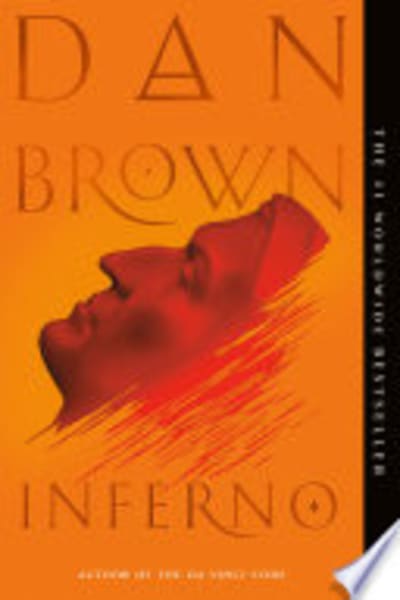
Inferno — Book Summary & Review
by Dan Brown
Last updated:
Inferno Summary
Inferno is structured like a ticking-clock scavenger hunt around Robert Langdon’s symbology expertise, with each stop functioning as a puzzle box tied to Dante’s Inferno and to “scientific” explanations that Dan Brown keeps promising will make the art do something. Brown leans hard on a recognizable framework: Langdon is dragged from one location to another in Italy, forced to interpret symbols under pressure, and then pushed into the next clue before anyone has time to fully verify the last one. A concrete example is the book’s use of the “Inferno” poem as a map—Langdon keeps translating lines and images into steps, and the antagonists keep weaponizing that translation delay. Brown also threads in the recurring Langdon-brand habit: he narrates his reasoning out loud, so the reader follows the logic even when it veers into hand-wavy leaps.
The strongest sequences aren’t the vague “secret passageways” stuff; they’re the way Brown stages tension through information control. Langdon’s choices—who to trust, what to reveal, what to assume—become the real suspense, especially once the riddle starts pointing toward a decision rather than a solution. Brown’s adversary is written to feel frighteningly competent, and Inferno keeps escalating by turning cultural references into operational instructions, culminating in an endgame where Langdon must decide what the clues mean for real people, not just for his brain.
Honest limitation: Inferno rarely slows down to test its own plausibility, so if you want rigorous historical scholarship or airtight science, you’ll feel the gears grinding. It also favors momentum and exposition over character depth, which can frustrate anyone who came for psychology instead of puzzles.
Key Takeaways from Inferno
-
1
Robert Langdon’s symbology method turns art into actionable clues, but Brown stresses speed over verification at every step.
-
2
Dante’s Inferno functions as both source text and operational blueprint, with each reference nudging Langdon toward the next location.
-
3
Cipher logic is presented as readable reasoning, yet Brown uses convenient leaps to keep the plot moving under pressure.
-
4
Trust and betrayal operate like a second puzzle, since the “right” interpretation often depends on who’s lying.
-
5
The “futuristic science” framing supplies urgency, but it’s mostly there to justify the riddle’s stakes, not to teach.
Who Should Read This
Someone who reads mysteries for the pleasure of solving clue chains while the clock runs will probably enjoy Inferno’s structure. If you’re stuck in a workweek rut and want an easy-to-follow thriller that rewards attention to symbols and details, this fits.
Who Shouldn't Read This
If you need scholarly accuracy—especially around Dante or the mechanics of codes—you’ll hate how Brown treats plausibility as optional. If you’re tired of long stretches of explanatory monologue and prefer lean action with minimal talking, Inferno will feel exhausting.
Editor's Verdict
The single best thing Inferno does is build suspense by weaponizing interpretation, especially when Langdon’s reading of Dante becomes a decision-making tool rather than a trivia exercise. The real limitation is that Brown prioritizes momentum and explanatory narration over careful credibility, so the “science” and some logic will feel like scaffolding. This hits hardest for anyone who’s burned out on slow literary thrillers and wants a structured, clue-driven read to reset their brain.
Ready to read Inferno?
Get your copy on Amazon today.
Inferno — Frequently Asked Questions
About Dan Brown
Dan Brown is an American author born in 1964 in New Hampshire. He studied English and philosophy at Amherst College and later earned a master’s degree in English from Boston University. Brown is credible on themes in his novels because he extensively researches art, history, and architecture, often drawing on real locations and institutions. He wrote major bestsellers including The Da Vinci Code and Angels & Demons, and Inferno (2013).