Helen of Troy, and Other Poems — Book Summary & Review
Last updated:
Public domain via Project Gutenberg — free and legal.
Helen of Troy, and Other Poems Summary
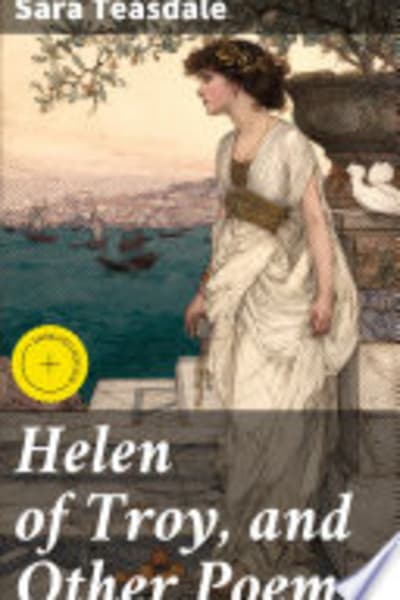
Helen of Troy, and Other Poems is organized around Sara Teasdale’s mythic speaker who keeps turning the Trojan story into a study of love as private weather, not public legend. Teasdale opens with Helen-like figures who don’t behave like statues; they feel, recoil, and bargain with their own desires, and the poems’ emotional logic is the real plot. What makes the collection work is Teasdale’s control of lyric compression: she can take a familiar myth moment and make it feel like a specific, bodily experience—heat, shame, longing—rather than a historical tableau. In the title poem “Helen,” the speaker treats Helen’s notoriety as a kind of captivity, and the poem’s repeated returns to regret land with the weight of a decision already made. Around that centerpiece, Teasdale’s “other poems” keep circling the same pressure points: loss that doesn’t resolve, femininity that gets judged from the outside, and desire that’s both chosen and imposed by circumstance. Teasdale also uses formal restraint—clear rhyme and carefully paced stanzas—to make the heartbreak feel disciplined, almost brave in its refusal to sprawl.
Here’s the honest limitation: this is not a complete retelling of the Trojan War, and it won’t satisfy anyone wanting narrative momentum or character backstory. If you’re looking for plot, you’ll find mostly interior weather reports. The added study apparatus in this edition—introduction, historical context, analysis, and reflection questions—helps, but it can’t replace the raw experience of reading Teasdale straight through. If you want myth as psychology, though, Teasdale delivers with rare focus.
Key Takeaways from Helen of Troy, and Other Poems
-
1
“Helen” centers regret as captivity, reframing mythic fame into a felt, daily pressure on the self.
-
2
Teasdale’s lyric compression turns legend into bodily sensation—heat, shame, longing—so emotions become the plot.
-
3
Formal restraint with clear stanzas makes heartbreak feel disciplined rather than sprawling or chaotic.
-
4
Feminine identity in these poems is judged externally, while the speaker fights to name her own desire.
-
5
Myth retelling here functions as psychological realism, not historical explanation or full-war narrative.
Who Should Read This
Someone who keeps thinking about how love can be both chosen and punished will find Teasdale’s speakers uncomfortably familiar. If you’re in a stretch of grief where nothing “wraps up,” you’ll likely read these poems like personal weather reports.
Who Shouldn't Read This
If you want a full Trojan War storyline with explanations and character development, this collection will frustrate you. If you dislike traditional poetic forms and prefer free-verse experimentation, Teasdale’s disciplined stanzas may feel too controlled.
Editor's Verdict
The best thing Sara Teasdale does here is convert the famous “Helen” premise into an interior argument about shame and desire, especially in the title poem. The main limitation is that the book offers interior lyric moments more than any coherent, continuous narrative. This hits hardest for anyone who’s recently left a relationship or lost a sense of self and wants myth translated into private emotional experience.
Ready to read Helen of Troy, and Other Poems?
Get your copy on Amazon today.
Helen of Troy, and Other Poems — Frequently Asked Questions
About Sara Teasdale
Sara Teasdale (1884–1933) was an American poet known for lyric verse and for her retellings of classical themes. She grew up in St. Louis, Missouri, and began publishing poems in her teens, later gaining national recognition for her craft and emotional clarity. She is credible on Helen of Troy because she wrote extensively about classical subjects, including the poem “Helen of Troy,” and published it in her collection Helen of Troy and Other Poems (1911). Other notable works include Rivers to the Sea (1915) and Love Songs (1917).