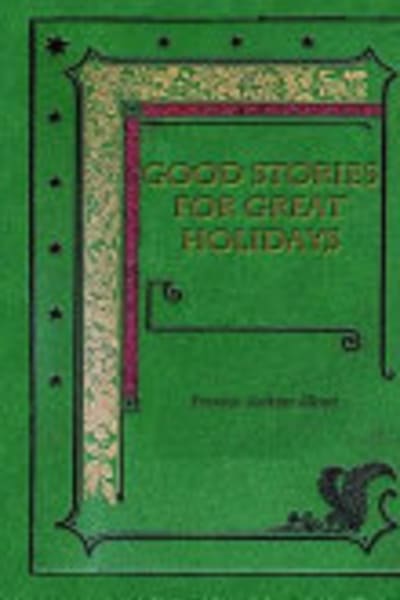
Good Stories for Great Holidays — Book Summary & Review
Last updated:
Public domain via Project Gutenberg — free and legal.
Good Stories for Great Holidays Summary
Good Stories for Great Holidays is built around a straightforward holiday-to-story structure: each major American celebration gets its own children’s tale, from New Year’s Day through Independence Day, Holloween, Thanksgiving, Christmas, and more. Olcott’s organizing principle is that a holiday isn’t only a date on the calendar—it’s a ready-made set of themes kids already recognize (renewal, gratitude, community, fear, generosity), and the stories simply swap in age-appropriate plots to match. In practice, Olcott leans on familiar moral rhythms: setup with a child’s everyday problem, a holiday context that reframes it, and a gentle resolution that teaches manners without sounding like a sermon. The “Holloween” selection is a good example of how she treats seasonal dread as a teachable emotion; the characters react like real kids do—curious first, then unsettled—and the story steers them toward courage and proper behavior. Likewise, the Thanksgiving material emphasizes counting blessings and noticing other people’s needs rather than only stuffing a moral into the last paragraph.
What surprised me most is how consistent Olcott is about variety while staying within the same framework: the holidays change, but the emotional mechanics don’t. You can almost feel Olcott aiming for repeatable comfort—stories that work whether you’re reading one on a specific date or using them as a weekly routine. Still, there’s a limitation: this is very much “children’s holiday fiction,” not literary craft or social critique, and adults looking for psychological depth or modern realism will feel held at arm’s length. If you want contemporary voice, you won’t find it here; if you want seasonal stories that behave, Olcott delivers on schedule.
Key Takeaways from Good Stories for Great Holidays
-
1
Holiday-by-holiday structure: Olcott assigns a distinct story to each celebration, so you can read by date instead of by plot arc.
-
2
Theme-to-emotion mapping: each holiday cues a specific kid feeling—gratitude, courage, renewal—then the story turns that feeling into action.
-
3
Moral rhythms: most tales follow a clear pattern of child problem, holiday reframing, and a gentle behavioral resolution.
-
4
Holloween as emotional practice: the Halloween story treats fear as curiosity first, then channels it into courage and “proper” conduct.
-
5
Thanksgiving emphasis: Olcott foregrounds noticing others’ needs and counting blessings, not elaborate spectacle or politics.
Who Should Read This
Someone who is building a seasonal reading routine for children and wants stories that match the calendar will likely enjoy Olcott’s setup. If you’re planning holiday-themed read-alouds and want predictable, kid-friendly emotional lessons, Olcott fits the bill.
Who Shouldn't Read This
If you’re hunting for modern literary storytelling—messy characters, ambiguity, or adult-level psychological realism—Olcott’s gentle moral structure will feel restrictive. If you want a single cohesive novel or a thematic essay instead of many separate holiday tales, you’ll be frustrated by the episodic format.
Editor's Verdict
The best thing Good Stories for Great Holidays does is deliver reliable holiday-to-mood storytelling; “Holloween” is a clear example of how Olcott turns fear into teachable courage. The real limitation is that it stays firmly in children’s moral fiction territory, offering little complexity beyond seasonal lessons. This book hits hardest for parents and teachers preparing read-alouds right before a holiday, when you need something that behaves and matches the moment.
Ready to read Good Stories for Great Holidays?
Get your copy on Amazon today.
Good Stories for Great Holidays — Frequently Asked Questions
About Frances Jenkins Olcott
Frances Jenkins Olcott was an American author and editor known for writing holiday and seasonal literature. She drew on her experience compiling and presenting stories for family reading, making her credible on holiday storytelling and traditions. She authored Good Stories for Great Holidays and also wrote other children’s and family-focused books, including The Little Book of Christmas Stories.