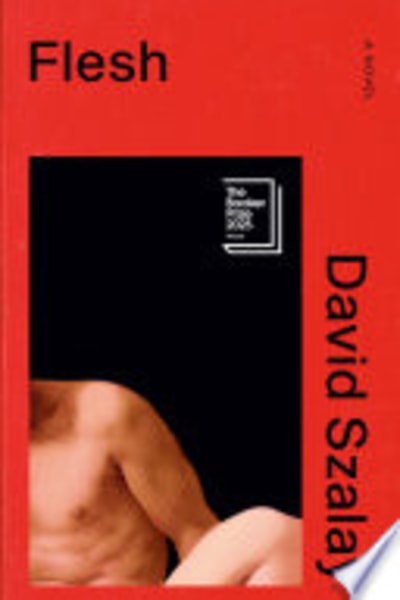
Flesh — Book Summary & Review
by David Szalay
Last updated:
Flesh Summary
In Flesh, David Szalay builds a slow-burn system of social “protocols” and private bargains that István can’t interpret until it’s already too late, and Szalay keeps tightening the screws chapter by chapter. The book begins with fifteen-year-old István in a quiet Hungarian apartment complex, newly arrived, painfully out of step at school, and drawn toward a married neighbor who feels like both refuge and trap. Szalay then tracks how a clandestine relationship forms through misread signals, half-spoken motives, and the terrifying mismatch between what István wants and what he’s actually being offered. By the time István moves through the army and later enters London’s super-rich orbit—money and status functioning like weather—Szalay’s realism turns predatory: love becomes a currency, intimacy becomes leverage, and ambition becomes a kind of gravity. There’s a concrete structural rhythm to it: scenes in Hungary set the emotional baseline, then each “upgrade” (new job, new circle, new access) accelerates the same core confusion—what he’s doing, why he’s doing it, and who’s steering. The novel’s limitation is also its engine: it’s less interested in explaining events than in showing how a person unravels while narrating their own justifications. If you’re looking for a tidy moral or a psychological “why” that resolves everything, Flesh won’t give it. Still, Szalay’s control is impressive—especially in the way he lets István’s upward drift feel both glamorous and deeply degrading, until it threatens to undo him completely.
Key Takeaways from Flesh
-
1
István’s “protocols” are the school-and-neighborhood rules he can’t read, so every choice he makes feels pre-scripted by others.
-
2
The clandestine relationship works as a misunderstanding machine, where desire and coercion blur until István can’t name the difference.
-
3
Szalay’s money-as-weather framework treats wealth like an atmosphere that changes your lungs, not just your bank account.
-
4
London’s super-rich circle functions as status therapy, rewarding performance while hollowing out genuine intimacy.
-
5
Unraveling-as-narration means the novel trusts what István tells himself, even when it’s obviously self-serving.
Who Should Read This
Someone who’s spent years feeling socially out of sync—then watched ambition smooth that discomfort into something worse—will recognize the trap Flesh maps. If you’ve recently noticed how power makes people rewrite their own motives, Szalay’s slow tightening will land hard.
Who Shouldn't Read This
If you want plot resolutions, courtroom-style explanations, or a clear moral accounting, Flesh will frustrate you because Szalay withholds the “why” you’re craving. If you dislike emotionally chilly realism that refuses catharsis, you’ll probably find the book’s restraint suffocating.
Editor's Verdict
Flesh is at its best when Szalay shows how István’s inability to interpret social cues becomes a long-term vulnerability, especially as the story pivots from Hungary into London’s money machine. The real limitation is that the novel explains very little and offers no satisfying psychological payoff for readers who need causes tied neatly to effects. This hits hardest for anyone who’s ever chased status to outrun loneliness and then realized they were just paying with their own sense of self.
Ready to read Flesh?
Get your copy on Amazon today.
Flesh — Frequently Asked Questions
About David Szalay
David Szalay is an author and journalist. He has written extensively about health, biology, and the body, drawing on reporting and research to explain how living systems work. His credibility on this topic comes from his focus on scientific and medical subjects and his experience translating complex science for general readers. Szalay is also the author of The Uninhabitable Earth and The Great Derangement.