Evicted — Book Summary & Review
Last updated:
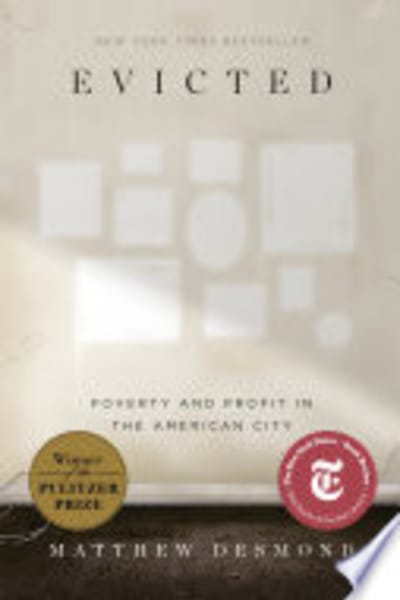
Evicted Summary
In Evicted, Matthew Desmond organizes his argument around a blunt causal claim: eviction is not merely a symptom of poverty but a driver of it, and he builds that case through a year of ethnographic fieldwork in Milwaukee’s poorest neighborhoods. Desmond follows eight families as rent arrears, landlord tactics, and housing instability ricochet through everyday life—health crises, job instability, school disruptions—until “housing” stops sounding like a background condition and starts behaving like an engine. One of the book’s most discussed through-lines is the way Desmond shows how landlords treat units as profit streams, using practices that keep tenants precarious rather than solving the underlying need. In Chapter “The Rent Is Too Damn High,” you see how a small gap between income and rent can metastasize into late fees, lockouts, and constant movement; the family’s schedule becomes a second job just to avoid losing the place they live. Desmond also introduces the idea of “eviction as a business model,” and he returns to it with concrete scenes: the speed of legal processes, the negotiation (or refusal) to restructure payments, and the emotional toll of waiting for a phone call that never comes. The financial crisis backdrop matters less as trivia and more as context for why the housing market’s incentives tightened right when household margins were already paper-thin. Desmond’s strongest moments come when he lets you sit inside the decision points—pay rent or pay for medicine, stay or move—so the policy debate lands as lived arithmetic, not abstract theory.
The limitation is also clear: Evicted stays tightly focused on Milwaukee and on the mechanics of eviction, so readers looking for a broad, national policy blueprint or a comparative international housing analysis will feel the ceiling on what Desmond covers.
Key Takeaways from Evicted
-
1
Eviction as a cause: Desmond treats forced moves as a poverty mechanism, not a rear-view consequence, with cascading costs for families.
-
2
Ethnographic fieldwork: Desmond spends extended time with households, so the argument is built from observed routines and negotiations.
-
3
Profit incentives for landlords: The book ties housing insecurity to what landlords can earn from turnover, fees, and scarce bargaining power.
-
4
Milwaukee’s poorest neighborhoods: Desmond’s geography is not backdrop; the local housing ecosystem shapes how quickly eviction becomes reality.
-
5
Chapter “The Rent Is Too Damn High”: This chapter shows how minor rent gaps multiply into lockouts, arrears, and instability.
Who Should Read This
If you’ve watched rent creep up and felt one missed paycheck turn your life into a countdown, you’ll recognize the logic Desmond tracks in Milwaukee. Someone deciding whether to spend money on social science that actually follows people through eviction will find the structure and evidence worth it.
Who Shouldn't Read This
If you want a tidy policy manual with national comparisons and ready-to-implement reforms, Evicted will frustrate you with its narrow geographic scope. If you’re allergic to emotionally heavy reporting—families arguing over bills, fear of lockouts, and constant instability—Desmond’s scenes will feel relentless.
Editor's Verdict
The single best thing Evicted does is make “eviction as a cause of poverty” feel provable by anchoring it in scenes from Chapter “The Rent Is Too Damn High,” where rent arithmetic turns into chaos. The real limitation is that Desmond largely confines his analysis to Milwaukee and the eviction process itself, offering fewer broader cross-city comparisons. This hits hardest for anyone mid-career who’s grown numb to housing debates and suddenly needs a concrete mechanism for why “the market” feels personal when you’re one slip away.
Ready to read Evicted?
Get your copy on Amazon today.
Evicted — Frequently Asked Questions
About Matthew Desmond
Matthew Desmond is an American sociologist and writer. He is a professor at Harvard University and has conducted extensive research on housing instability and eviction in the United States. His expertise comes from long-term fieldwork and academic study of how poverty, housing markets, and eviction shape family and community life. He is the author of Evicted: Poverty and Profit in the American City (2016). He also wrote the book The Neighbor’s Wife (2017).