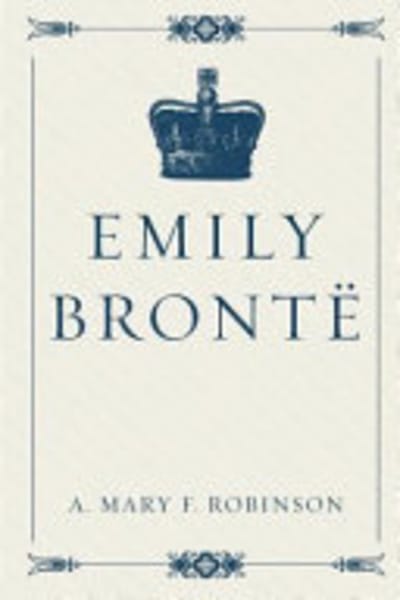
Emily Brontë — Book Summary & Review
by A. Mary F. (Agnes Mary Frances) Robinson
Last updated:
Public domain via Project Gutenberg — free and legal.
Emily Brontë Summary
Agnes Mary Frances Robinson’s subject matter is framed through her steady habit of treating literature as a form of social evidence, and this biography by A. Mary F. (Agnes Mary Frances) Robinson keeps returning to that idea: writing isn’t only art, it’s a record of how women think, argue, and translate the world. The book’s structure is basically chronological, but it’s also thematic in the way Robinson circles her own family pressures and public ambitions, moving from Royal Leamington Spa to France with the blunt insistence that a woman’s literary career is never “separate” from her life circumstances. One concrete example the author keeps using is Robinson’s work as a translator and critic—she doesn’t present translation as a side job, but as a disciplined way of choosing what deserves English attention. Another recurring through-line is the author’s portrayal of Robinson’s identity shifts after marriage, using the name changes (Darmesteter and Duclaux) as a lens for how reputations get filed, misfiled, and sometimes erased. The book also leans on Robinson’s position as an elder sister to Frances Mabel Robinson, treating that relationship as more than family trivia: it’s presented as a pressure system that shaped what kinds of writing she felt allowed to attempt.
Here’s the limitation: this volume is biography-first, not criticism-first. If you’re hunting for a deep, chapter-by-chapter reading of Emily Brontë’s novels or poems, you’ll finish with more context than close analysis. And if you want a breezy narrative with modern pacing, you may find the repeated name-and-dates scaffolding a little relentless.
Key Takeaways from Emily Brontë
-
1
Name changes (Darmesteter/Duclaux): the book uses married identities to show how women’s literary credit gets redistributed.
-
2
Translation as discipline: Robinson treats translation and criticism as serious authorship, not a consolation prize.
-
3
Women’s writing as evidence: the biography frames literature as a record of social thinking and argument, not only emotion.
-
4
Sisterly pressure: the Frances Mabel Robinson relationship is presented as a shaping force on ambition and risk-taking.
-
5
Chronology with a theme: the timeline keeps getting interrupted by recurring motifs about reputation, labor, and authorship.
Who Should Read This
Someone who feels stuck between wanting biography and wanting literary meaning—because you keep asking why a writer’s choices mattered—will like how Robinson ties life to craft. If you’re preparing for a class or discussion where you need historical context for women writers, this gives you usable scaffolding fast.
Who Shouldn't Read This
If you want close readings of Emily Brontë’s specific scenes, lines, and techniques, this biography will frustrate you because it stays focused on life and positioning. If you dislike dense name-and-date tracking and thematic repetition, you’ll probably bounce off the book’s steady, archival rhythm.
Editor's Verdict
The single best thing this book does is treat translation and criticism as central to Agnes Mary Frances Robinson’s authorship, repeatedly using her translator’s work to argue she chose intellectual labor, not sidelines. The limitation is that it delivers context-heavy biography without the close, textual analysis readers often expect from a book orbiting Brontë. Anyone who’s trying to understand how women’s literary reputations get constructed mid-research—especially before a paper or seminar—will get the most out of it.
Ready to read Emily Brontë?
Get your copy on Amazon today.
Emily Brontë — Frequently Asked Questions
About A. Mary F. (Agnes Mary Frances) Robinson
A. Mary F. (Agnes Mary Frances) Robinson was a British author and literary scholar known for writing about Emily Brontë. She was credible on this topic because her work focused specifically on Brontë studies and drew on documented biographical and critical material about Emily Brontë. Her notable works include Emily Brontë and The Brontës: A Critical Study.