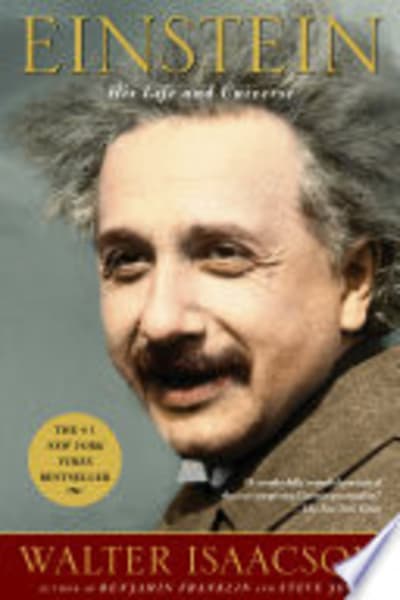
Einstein: His Life and Universe — Book Summary & Review
Last updated:
Einstein: His Life and Universe Summary
Isaacson opens with Einstein's 1905 'miracle year' — a period that saw four groundbreaking papers that reshaped physics. In 'The Mind of a Scientist,' Isaacson explores not just Einstein's intellectual genius but also his quirky personality and complex personal life. The book is meticulously structured, with chapters like 'E=mc²' that are both informative and engaging, offering a nuanced view of Einstein's theories alongside his eccentricities. Isaacson's narrative takes full advantage of newly available papers, painting a vivid portrait that goes beyond the well-trodden image of Einstein as the absent-minded professor. However, those looking for a purely scientific analysis might be frustrated by the heavy focus on Einstein's personal life and politics. Isaacson balances the technical with the personal, but the book is more a holistic biography than a deep dive into physics alone.
Key Takeaways from Einstein: His Life and Universe
-
1
The Miracle Year: 1905 saw Einstein publish four papers that revolutionized physics — one on the photoelectric effect, laying groundwork for quantum theory.
-
2
Einstein's Brain vs. Heart: Isaacson explores the tension between Einstein's rational mind and his often chaotic personal relationships.
-
3
Nonconformity as Strength: Einstein's disregard for authority and convention fueled not just his scientific breakthroughs but also his political activism.
-
4
Einstein's Pacifism: Despite his work leading to the atomic bomb, Einstein remained a committed pacifist, advocating for global peace.
-
5
Unified Field Theory: Isaacson details Einstein's later-life obsession with unifying the forces of physics, a quest that remained unfulfilled.
Who Should Read This
Someone who wants to understand how Einstein's unique personality influenced his scientific achievements. If you're curious about the human side of genius, this book will resonate.
Who Shouldn't Read This
If you're seeking a book focused solely on Einstein's scientific theories, you'll find the personal anecdotes distracting. Those uninterested in Einstein's political and social views may also be disappointed.
Editor's Verdict
The book shines in 'The Miracle Year' chapter, vividly illustrating Einstein's groundbreaking discoveries. However, it skips detailed mathematical explanations, which might disappoint science enthusiasts. If you're at a turning point in your career and questioning life's direction, Einstein's story of relentless curiosity is both inspiring and grounding.
Ready to read Einstein: His Life and Universe?
Get your copy on Amazon today.
Einstein: His Life and Universe — Frequently Asked Questions
About Walter Isaacson
Walter Isaacson is an acclaimed American author and historian, known for his biographies of influential figures. He served as the CEO of the Aspen Institute, chairman of CNN, and editor of Time magazine. Isaacson's expertise in writing about complex scientific and historical topics makes him credible in authoring "Einstein: His Life and Universe." Other notable works include "Steve Jobs," a biography of the Apple co-founder, and "Leonardo da Vinci," exploring the life of the Renaissance polymath.