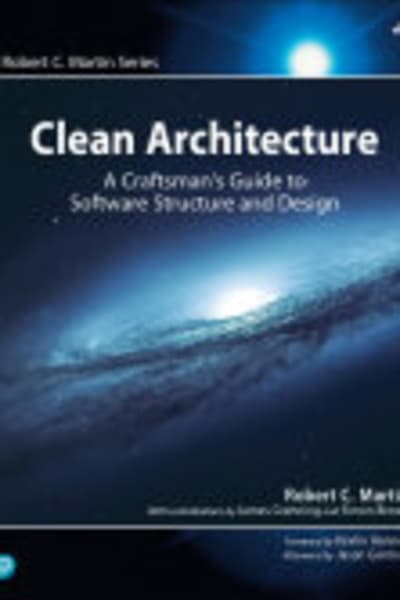
Clean Architecture — Book Summary & Review
Last updated:
Clean Architecture Summary
Robert C. Martin introduces the concept of the "Screaming Architecture" in *Clean Architecture*, urging developers to design systems that clearly communicate their purpose. Martin's book is structured around universal rules of software architecture and is packed with real-world solutions to common challenges. The chapter 'The Dependency Rule' is particularly enlightening as it discusses how dependencies should always point inward, towards higher-level policies. Martin's approach is undeniably practical, drawing from over fifty years of experience, and he spares no detail in explaining why certain architectural choices are crucial. However, the book assumes a fair degree of prior knowledge in software development, which might frustrate beginners who are not familiar with basic programming principles. While *Clean Architecture* does an excellent job of offering pragmatic advice for seasoned developers, it's not a gentle introduction for those just starting out in the field.
Key Takeaways from Clean Architecture
-
1
Screaming Architecture: Your architecture should shout the intent of the system, making its purpose immediately clear.
-
2
The Dependency Rule: All dependencies must point inwards to ensure the system's core is independent of external changes.
-
3
Interface Adapters: This layer converts data from the form most convenient for the use cases and entities.
-
4
The Clean Architecture: A design paradigm promoting separation of concerns and independence from frameworks.
-
5
Entities: High-level business rules that are the heart of the application, unaffected by external changes.
Who Should Read This
Someone who is already comfortable with software development and is looking to refine their architectural skills. If you're facing recurring issues with system scalability or maintainability, this book could be your guide.
Who Shouldn't Read This
If you're new to programming, the advanced concepts could be overwhelming and might not provide the foundational learning you need. Readers looking for a casual or narrative-driven tech book will be disappointed by the technical depth and focus.
Editor's Verdict
The book excels at providing actionable advice for experienced developers, especially the section on 'The Dependency Rule'. However, it's not beginner-friendly and presumes a strong understanding of coding principles. If you're a seasoned developer facing architectural challenges, this book will be a valuable asset in your toolkit.
Ready to read Clean Architecture?
Get your copy on Amazon today.
Clean Architecture — Frequently Asked Questions
About Robert C. Martin
Robert C. Martin, also known as "Uncle Bob," is a renowned software engineer with over five decades of experience in the industry. He is a co-founder of the Agile Manifesto, lending significant credibility to his expertise in software design and architecture. Martin authored "Clean Architecture," a seminal work on software structure and design principles. His other notable works include "Clean Code" and "The Clean Coder," both of which emphasize professional software craftsmanship.