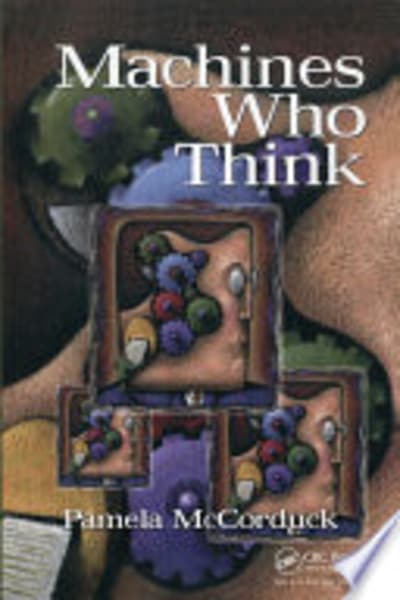
Machines Who Think — Book Summary & Review
Last updated:
Machines Who Think Summary
McCorduck’s book starts with an examination of the metaphorical “Turing Test,” a concept she returns to again and again to probe how humans and machines keep renegotiating their relationship. In The Romantic Rationalist, she devotes a chapter to Marvin Minsky, unpacking the philosophical impulses behind the early AI pioneers. Firsthand interviews and historical storytelling sketch a vivid picture of AI’s early days, and the result is both informative and genuinely readable. McCorduck’s knack for stitching personal anecdotes to technical explanations helps even dense ideas land with a general audience. Still, the book doesn’t go far into the technical breakthroughs of the past two decades, a gap that will annoy readers who want the latest AI innovations rather than the origin story.
Key Takeaways from Machines Who Think
-
1
Turing Test: Explored as a metaphor for human-machine interaction, emphasizing its cultural rather than technical implications.
-
2
The Romantic Rationalist: McCorduck profiles Marvin Minsky, highlighting his philosophical contributions to AI's foundational ideas.
-
3
Artificial Intelligentsia: A term McCorduck uses to describe the community of early AI pioneers and their diverse motivations.
-
4
Machines Who Think: The book posits AI as a reflection of human creativity and a continuation of cultural traditions.
-
5
Afterword Analysis: Offers reflections on AI's integration into daily life, though it lacks depth on recent technological advances.
Who Should Read This
Someone who is curious about the origins of AI and its cultural impact will find this book enlightening. If you enjoy historical narratives intertwined with interviews, this book offers a rich tapestry of early AI development.
Who Shouldn't Read This
If you're looking for a deep dive into the latest AI technologies, this book will disappoint due to its historical focus. Technical readers seeking cutting-edge insights should look elsewhere for more contemporary analysis.
Editor's Verdict
McCorduck excels at painting a vivid picture of AI's cultural roots, especially in the chapter 'The Romantic Rationalist'. The book's limitation is its lack of coverage on recent AI advancements, leaving tech enthusiasts wanting more. Anyone seeking to understand the cultural and philosophical foundations of AI will find this book especially rewarding before diving into more technical material.
Ready to read Machines Who Think?
Get your copy on Amazon today.
Machines Who Think — Frequently Asked Questions
About Pamela McCorduck
Pamela McCorduck was an American author and journalist, renowned for her work on artificial intelligence (AI). Born in 1940, she earned a degree in English from the University of California, Berkeley. McCorduck's credibility in AI stems from her seminal book, "Machines Who Think" (1979), which explores the history and development of AI. She also co-authored "The Fifth Generation" (1983) with Edward Feigenbaum and "The Universal Machine" (1985), further establishing her expertise in technology and AI narratives.