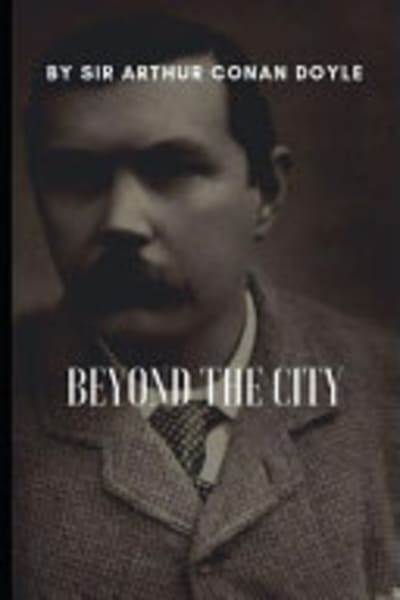
Beyond the City — Book Summary & Review
Last updated:
Public domain via Project Gutenberg — free and legal.
Beyond the City Summary
Beyond the City is built around a Victorian-world pressure cooker: Arthur Conan Doyle pits romance and money against the social rituals that keep his characters upright. The plot follows figures whose private desires start to behave like a solvent, slowly weakening the public “properness” they rely on. Conan Doyle keeps returning to the same friction—love wants immediacy, wealth wants control, and the older code of conduct insists on delay, restraint, and appearances. You feel the argument in the structure: scenes keep circling gatherings, negotiations, and conversations where a single decision can tip a household from stability into spectacle.
One concrete example is the way the story treats talk as a kind of currency. Conversations about status and prospects are never innocent; they’re bargaining. When characters chase romance, they do it with the same tactics they use for money—calculation, leverage, and timing—so the supposed “soft” emotion becomes another instrument of power. Another example is Conan Doyle’s repeated use of contrast: the city’s polished surfaces versus the quieter, morally ambiguous spaces where characters rationalize what they’re doing. The book’s tension peaks when the characters can no longer pretend their choices are merely personal; they turn public, and the social world responds.
Conan Doyle’s best move is showing how easily ideal motives get dressed up in respectable language. He’s not writing a cozy romance or a simple morality tale; he’s showing how Victorian ethics can function like theater, and how greed and desire exploit the script. Honest limitation: if you want a fast, mystery-style engine or a clearly defined “solution,” you may find Beyond the City more socially focused than plot-driven, and its payoff won’t satisfy readers who crave dramatic twists.
Key Takeaways from Beyond the City
-
1
Victorian social code: Doyle treats “properness” as a system that characters can manipulate, not a moral shield that automatically protects them.
-
2
Romance vs money: Love is portrayed with the same negotiating instincts as wealth, so feelings become leverage in social conflict.
-
3
Talk as currency: Conversations function like transactions, where reputation, timing, and insinuation do real work inside the plot.
-
4
Public vs private selves: Doyle repeatedly forces characters to reconcile what they want privately with what they must perform publicly.
-
5
City surfaces and moral shadow: The contrast between polished settings and morally gray spaces explains why characters rationalize their choices.
Who Should Read This
Someone who’s tired of romances where feelings float above consequences will like how Beyond the City makes desire and money behave like competing forces. If you’re dealing with a messy situation where reputation, finances, and attraction are all pulling in different directions, Conan Doyle’s social pressure feels uncomfortably relevant.
Who Shouldn't Read This
Someone who wants a mystery-like momentum—clues, hunts, and a tidy resolution—will likely feel the novel’s emphasis on social friction drags. If you dislike Victorian-era dialogue and indirect maneuvering, Conan Doyle’s plotting through talk and manners will frustrate you more than it entertains you.
Editor's Verdict
The single best thing Beyond the City does is expose how romance and money impersonate morality through social performance, with Conan Doyle repeatedly staging pivotal decisions inside conversations and gatherings. The real limitation is that the novel leans heavily on manners and social dynamics rather than delivering a strong, mystery-style engine or clear mechanical escalation. This will hit hardest for someone stuck in a “respectable” life decision right before it turns public—when you realize your private motives are already shaping your reputation.
Ready to read Beyond the City?
Get your copy on Amazon today.
Beyond the City — Frequently Asked Questions
About Arthur Conan Doyle
Arthur Conan Doyle (1859–1930) was a Scottish physician and writer best known for detective fiction. He trained as a doctor and practiced medicine, giving him firsthand experience with illness, observation, and early forensic thinking. This background makes him credible when writing about medical or investigative themes in Beyond the City. He also wrote The Hound of the Baskervilles and A Study in Scarlet.